A Landmark Moment for French Padel
According to statistics from the French Tennis Federation (FFT), the number of padel enthusiasts in France currently exceeds 800,000, including over 151,834 registered players. Of these players, 132,208 are male and 19,626 are female. This rapid growth is not limited to the leisure sector. There are also many tournaments, such as weekend friendly matches at community clubs, or professional tournaments held at places like the Couëron Padel Club and Vernon Club, where paddle tennis is reaching all levels of people, from enthusiasts to professionals.
However, this booming scene has also placed increasingly higher demands on padel courts. Whether used for high-end events or everyday leisure, a professional, reliable, and low-maintenance pitch has become the foundation for the project’s success.
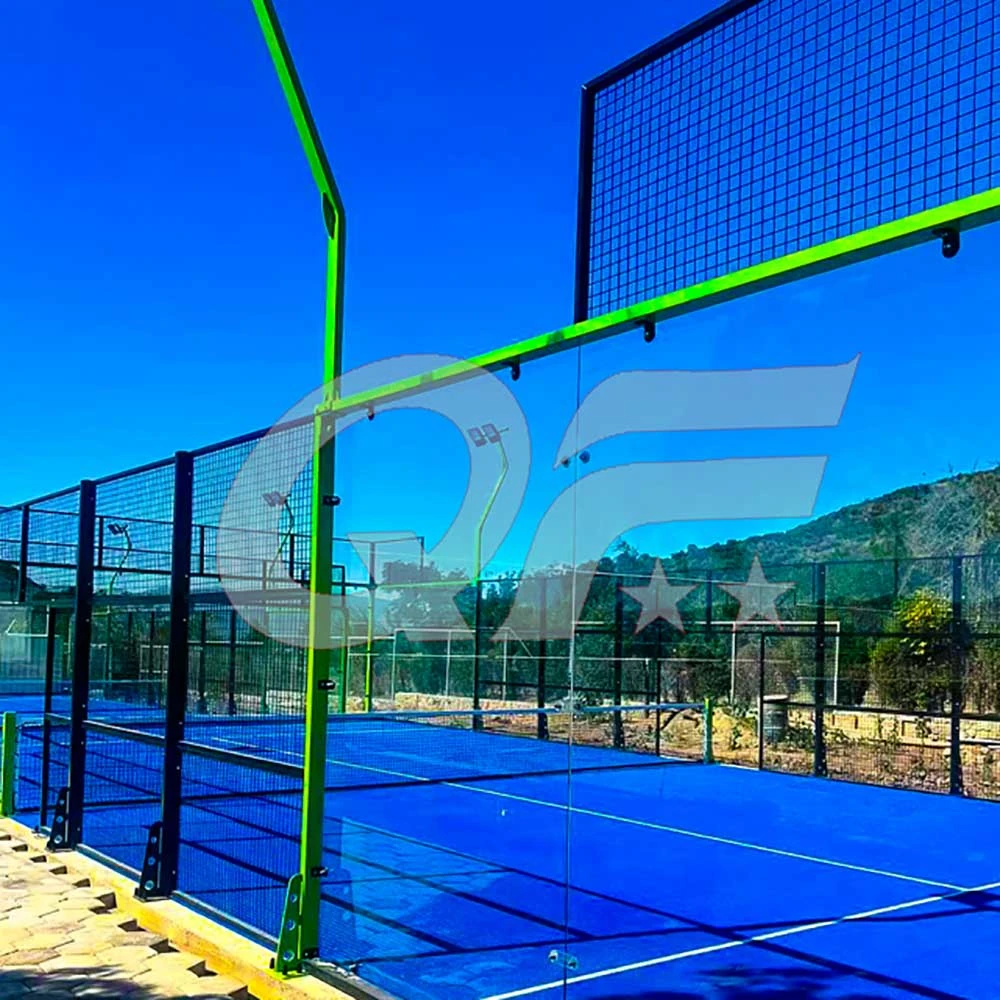
The Real Challenges Facing European Padel Clubs
Whether in France, Germany, or other parts of Europe, club and venue operators face three key challenges:
Year-Round Outdoor Use:
Given Europe’s cold, rainy winters and hot summers, paddle tennis court must possess exceptional resistance to corrosion, UV radiation, and thermal expansion and contraction, ensuring a long service life under a wide range of climatic conditions.
High-intensity usage:
Daily training sessions, league matches, and commercial bookings require structures that withstand constant pounding without warping or degrading.
Safety & compliance:
European buyers demand certified materials to avoid legal liability and insurance risks; non-compliant courts are simply not an option.
This is exactly why a growing number of clubs, real estate developers, and government projects are moving toward professional-grade, extreme-environment-ready padel court systems.
Meet the PD10 Super Padel Court – Engineered for Europe
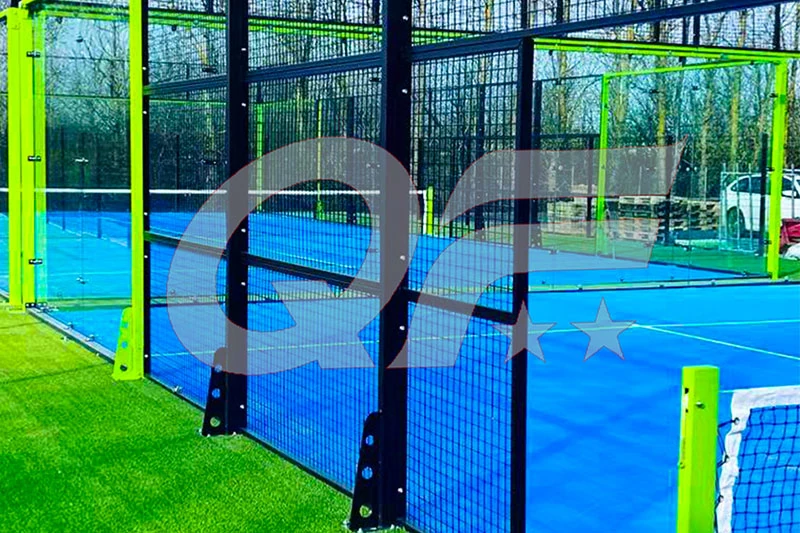
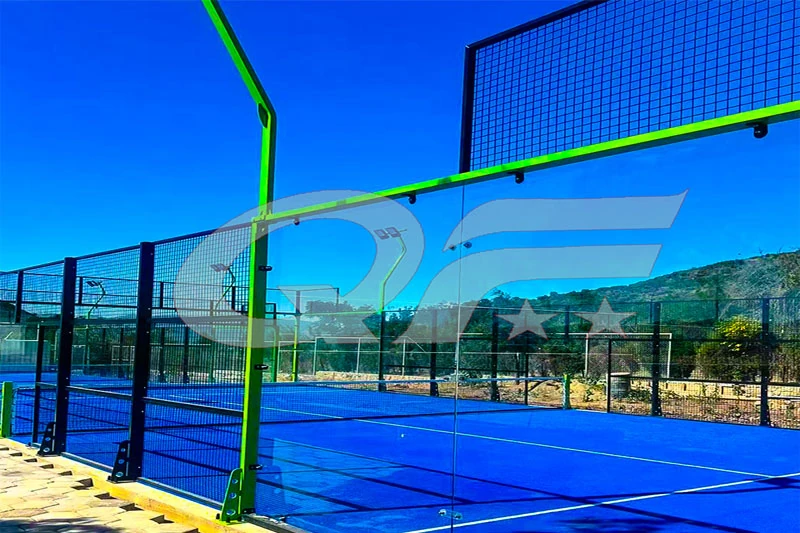
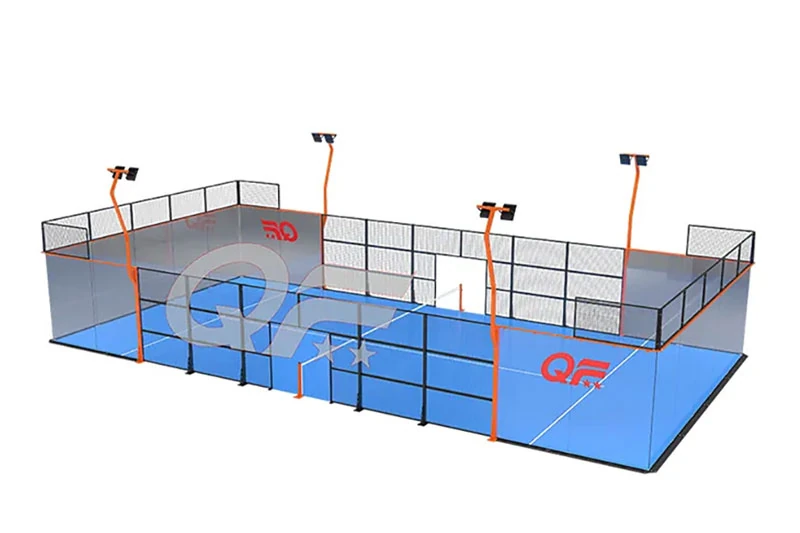
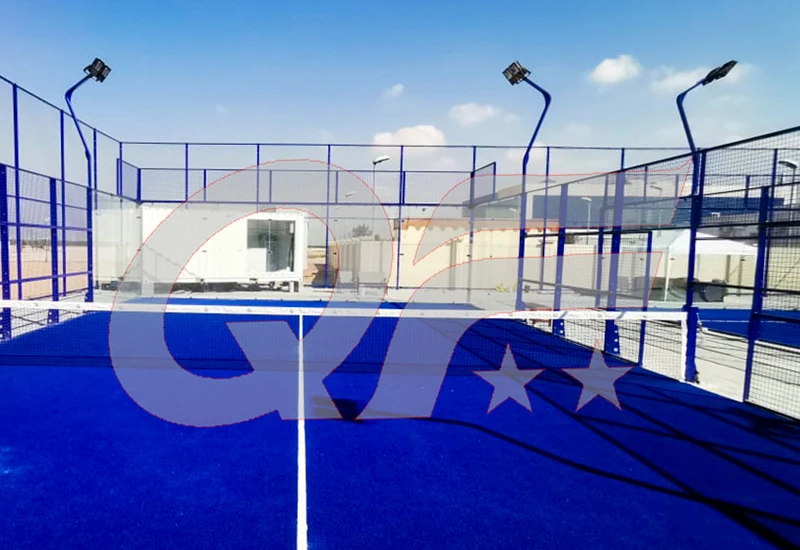
As an experienced padel court manufacturer and supplier, we developed the PD10 Full Panoramic Padel Court specifically for demanding markets like France, Germany, and beyond. Our court has already been successfully installed in Germany and is delivering measurable returns for clubs and investors.
The PD10 features tempered safety glass certified to EN 12150-2:2004, fully compliant with EU Construction Products Regulation No. 305/2011 and CE certified under 2014/35/EU. This not only maximizes visibility for players and spectators but also enhances the club’s premium image while meeting all European safety requirements. The steel structure is equally impressive: using hot-dip galvanized square tubes inside and out, combined with SPHC steel, the PD10 offers excellent corrosion resistance, a smooth surface, and high toughness. While typical competitor courts using ordinary steel tubes last only 8 to 10 years, the PD10 delivers a reliable lifespan of over 12 years.
Extreme Environment Adaptation – A Core Strength
One of the most distinctive features of the PD10 is its engineering for harsh conditions. For freezing winters and hot summers, the weather-resistant powder coating prevents deformation. For high humidity and rain, enhanced anti-rust protection works together with a drainage-friendly turf system to maintain court performance. When it comes to strong winds, the reinforced frame and high-strength fastening system provide exceptional stability. And for frequent heavy use, modular components keep maintenance low while maintaining structural integrity.
Key extreme environment features:
Temperature resistance:
Withstands freezing winters and high summer temperatures without deformation or corrosion
Humidity & rain protection:
Enhanced anti-rust coating + drainage-friendly turf system
Wind & heavy pressure resistance:
Reinforced frame + high-strength fastening system
Safety glass durability:
Premium tempered glass maintains impact resistance under temperature fluctuations
Low maintenance:
Durable materials and modular components reduce operating costs in challenging environments
This makes the PD10 ideal not only for France and Germany but also for coastal regions, the Middle East, and other demanding environments.
Advanced Manufacturing Process – The Difference Is in the Details
While many competitors still rely on manual cutting and traditional welding, our process uses laser cutting for precise dimensions, robotic plus manual welding for full weld coverage on the frame, and a complete coating line that includes shot blasting, electrostatic powder coating, and automatic curing. Combined with export-grade packaging and strict quality assurance on glass, lighting, and steel structures, the result is a court with precise dimensions, strong welds, uniform coating, minimal transport damage, and long-term reliability.
Comparison Table: Manufacturing Process & Quality
| Process Stage | PD 10 | Competitor |
| Cutting & Welding | Laser cutting + robot/manual full weld | Manual cutting + traditional welding |
| Coating | Shot blasting + electrostatic + automatic curing | Basic coating |
| Packaging & QA | Export-grade packaging + strict QA | Basic packaging + loose QA |
Real-World Case Study: Germany
We recently completed a Super Padel Court project in Germany for a sports club requiring year-round outdoor operation, resistance to cold winters and rainy weather, and a premium playing experience to attract more members. We recommended and installed the PD10 Full Panoramic Padel Court, including full panoramic glass, tempered safety glass to European standards, an LED lighting system, and a reinforced wind-resistant structure.
The outcomes were clear. The club’s facility image improved significantly, more local players were attracted to the venue, and booking revenue increased noticeably. This project has since become a reference case for European buyers evaluating professional court suppliers, demonstrating that the PD10 delivers reliably in rain, low temperatures, and frequent club use.
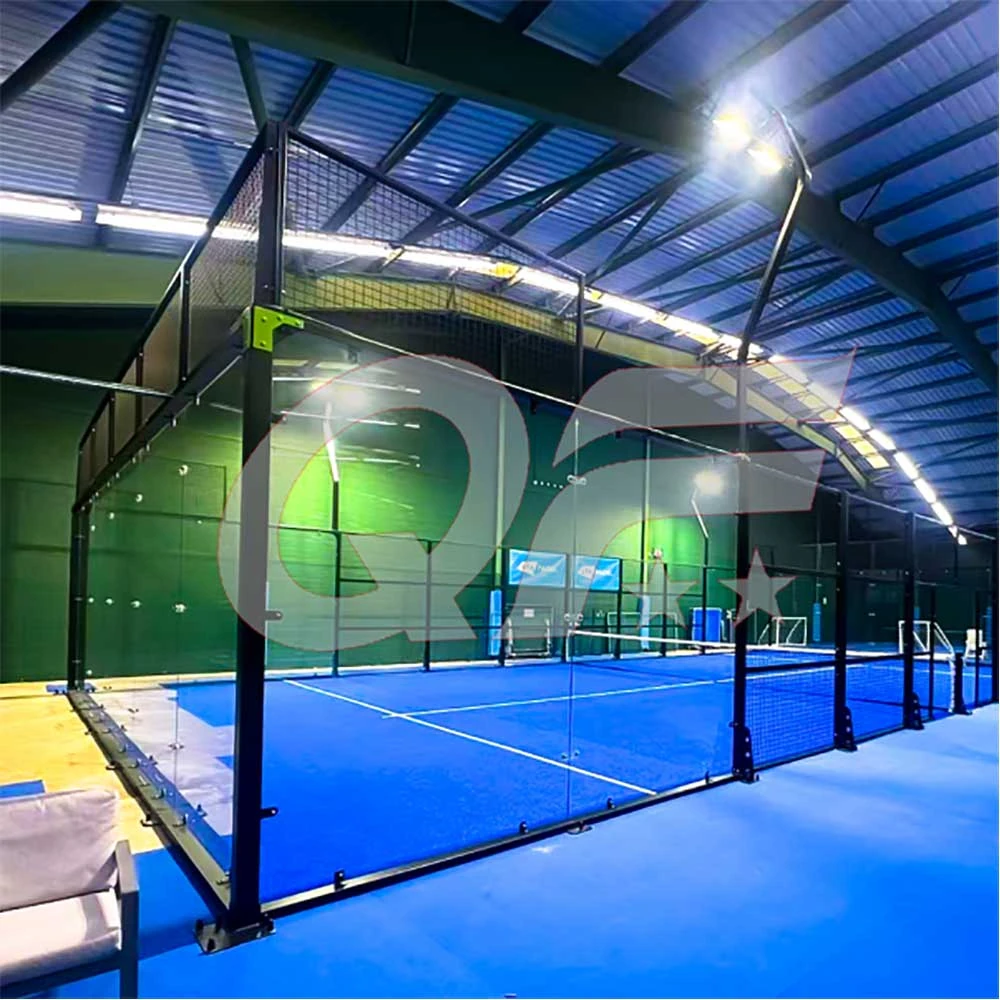
Who Is Buying Our Padel Courts
Based on real customer data, our client base breaks down as follows:
Padel clubs & investors – 50%
Real estate developers & resorts/hotels – 30%
School & government projects – 20%
Professional-grade Padel courts are an essential requirement for commercial operations. Clubs need them to attract and retain players; developers use them to add high-return-on-investment facilities; and public institutions need durable and compliant infrastructure.
Certifications – Lowering Your Risk
Buying a padel court is a long-term investment. That is why the PD10 series meets or exceeds multiple standards, including CE 2014/35/EU for the EU Low Voltage Directive, GB 19272-2011 for outdoor fitness equipment safety, GB/T 20394-2013 for artificial turf at superior grade, and EN 12150-2:2004 for tempered safety glass under EU CPR No. 305/2011. Obtaining these certifications is crucial for public tendering projects, commercial insurance underwriting, and legal compliance for various clubs and resorts in Europe. When clients build a padel court for long-term commercial use, they prioritize durability and certified components above all else.
FAQ
Q: Can I customize the court with my brand?
A: Yes, we provide customization for structure color, turf, logos, and sponsor branding.
Q: How long is production and shipping?
A: Production is 20–30 days after deposit. Shipping depends on destination port.
Q: Do you supply indoor and outdoor padel courts?
A: Yes, we manufacture both indoor and outdoor courts with high durability materials.
Conclusion
The French padel tennis market has crossed a significant milestone, and investors who choose certified, durable courts that can withstand extreme conditions can reap the greatest value over the next decade. The PD10 Super Padel court is a strategic investment in superior performance, safety, and revenue growth. If you are interested in our products, please feel free to contact us for a quote.