When planning a new padel club, sports facility, hotel project, or commercial investment, understanding the correct padel court dimensions and space requirements is an important foundation for project planning. While a standard padel court has fixed playing dimensions, a successful project requires more than simply meeting the 20m × 10m playing area. It also involves careful consideration of space utilization, functional layout, and long-term operational needs.
For club owners, investors, hotels, training centers, and sports complexes, effective space planning can help maximize land utilization, improve the experience for players and visitors, and provide better support for daily operation, maintenance, and future expansion.
Beyond court size and layout design, the long-term performance of a padel facility is also influenced by structural quality, material selection, manufacturing processes, and overall construction standards. A professional padel project requires careful consideration of safety, durability, and practical usage requirements throughout the design, production, and installation stages.
This guide explains standard padel court dimensions, space planning requirements, layout options for different projects, and the key manufacturing standards that influence the quality and long-term performance of professional padel courts.
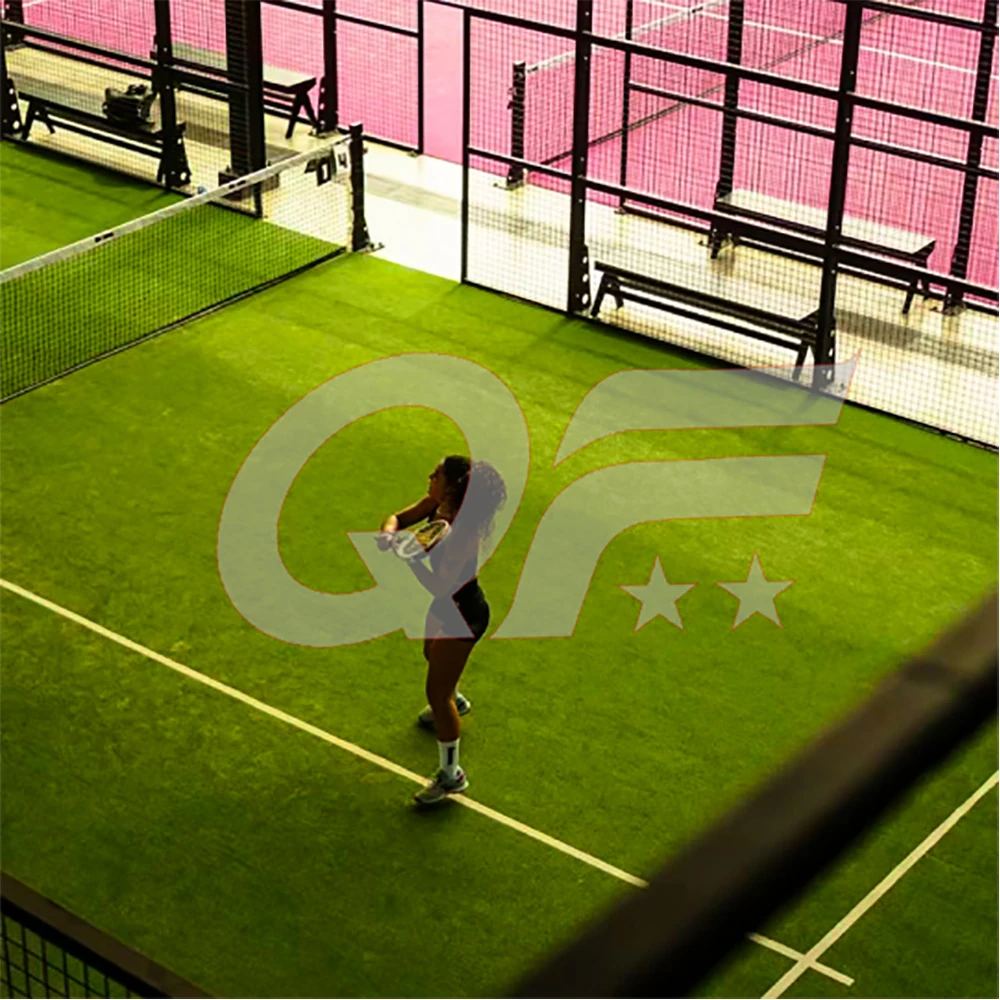
What Are the Standard Padel Court Dimensions
A standard padel court is designed according to internationally accepted dimensions, providing a consistent playing environment for recreational and competitive use.
Standard Padel Court Size
The official padel court size is:
- Length: 20 meters
- Width: 10 meters
- Total playing area: 200 m²
These dimensions are widely used for commercial clubs, hotels, residential communities, and professional training facilities.
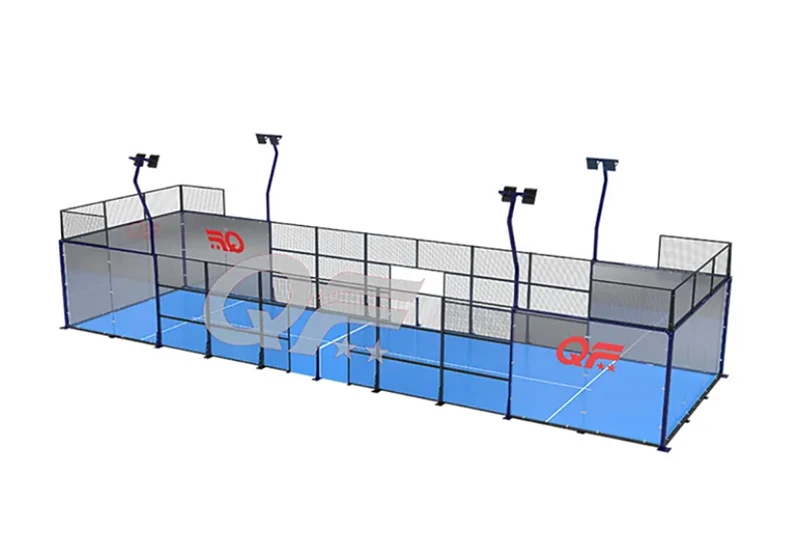
Main Components of a Standard Padel Court
A complete court consists of several integrated systems:
- Playing area
- Glass walls
- Steel structure
- Net system
- Safety clearance area
Each component contributes to the court’s performance, safety, and durability.
Why Padel Court Dimensions Are Only Part of Space Planning
Although the playing area measures 20 × 10 meters, successful projects require additional surrounding space. Proper planning improves user experience while making daily operation and maintenance more efficient.
Player Walking Space
Providing sufficient circulation space allows players to move safely before and after matches while reducing congestion around the court.
Spectator Area
A dedicated viewing area improves comfort for visitors and creates a better environment for tournaments, training sessions, and club activities.
Maintenance Access
Maintenance personnel should have convenient access for cleaning, inspections, equipment servicing, and routine maintenance without affecting normal court operation.
Lighting Arrangement
Lighting should be positioned to provide even illumination across the playing surface while minimizing glare for players.
Drainage System
An efficient drainage system helps remove rainwater quickly, reducing standing water and supporting reliable outdoor court performance.
Entrance and Circulation Design
Well-planned entrances and internal pathways improve traffic flow for players, coaches, spectators, and maintenance teams.
Padel Court Layout Options for Different Club Sizes
Every project has different land conditions and investment objectives. Choosing the right padel court layout helps maximize available space while supporting long-term business operation.
Small Padel Club Layout
Suitable for:
- Hotels
- Private clubs
- Residential communities
These projects often focus on efficient land utilization while creating a premium recreational environment.
Medium Padel Club Layout
Suitable for:
- Professional clubs
- Training centers
Medium-sized facilities typically balance playing capacity with comfortable circulation and supporting amenities.
Large Padel Center Layout
Suitable for:
- Sports complexes
- Commercial investment projects
Larger developments generally include multiple courts together with supporting facilities that improve visitor experience and operational efficiency.
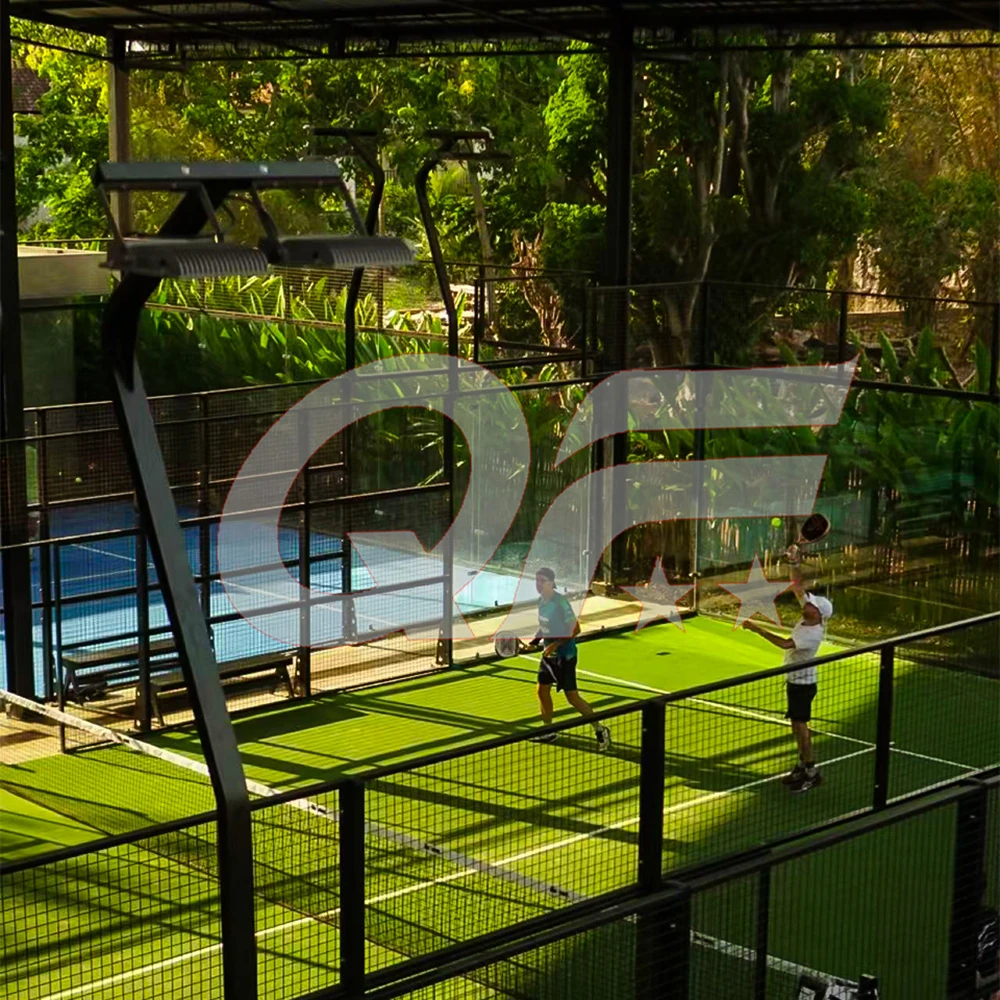
Padel Court Layout Designs for Different Projects
Different applications require different planning priorities. A customized layout helps optimize available land while meeting operational requirements.
Hotel & Resort Padel Court Design
Hotel and resort projects often emphasize:
- Efficient use of limited space
- Premium visual appearance
- Integration with surrounding leisure facilities
A thoughtfully designed court can become an attractive recreational feature for guests.
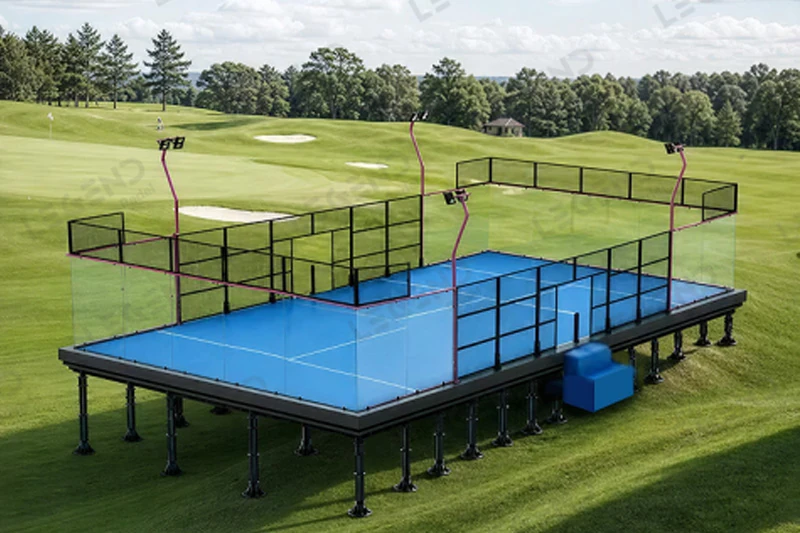
Rooftop Padel Court Design
Rooftop installations require additional planning, including:
- Structural assessment
- Space optimization
- Safety considerations
Careful planning helps ensure the court integrates with the existing building while providing a safe playing environment.
Commercial Padel Club Layout
Commercial clubs commonly include more than the courts themselves. Supporting facilities may include:
- Multiple court arrangements
- Reception area
- Spectator zone
- Changing rooms
- Social areas
An organized layout creates a better experience for members and visitors while improving daily management.
How QIFAN Ensures Quality from Manufacturing to Delivery
Choosing the right padel court dimensions and layout is only the beginning of a successful padel project. The long-term performance of a court also depends on manufacturing quality, material selection, production technology, and strict quality control.
A padel court is a complete system consisting of structural components, glass walls, artificial turf, lighting systems, and other accessories. Through standardized production procedures and continuous investment in manufacturing technology, QIFAN focuses on improving structural reliability, safety performance, corrosion resistance, and long-term outdoor durability.
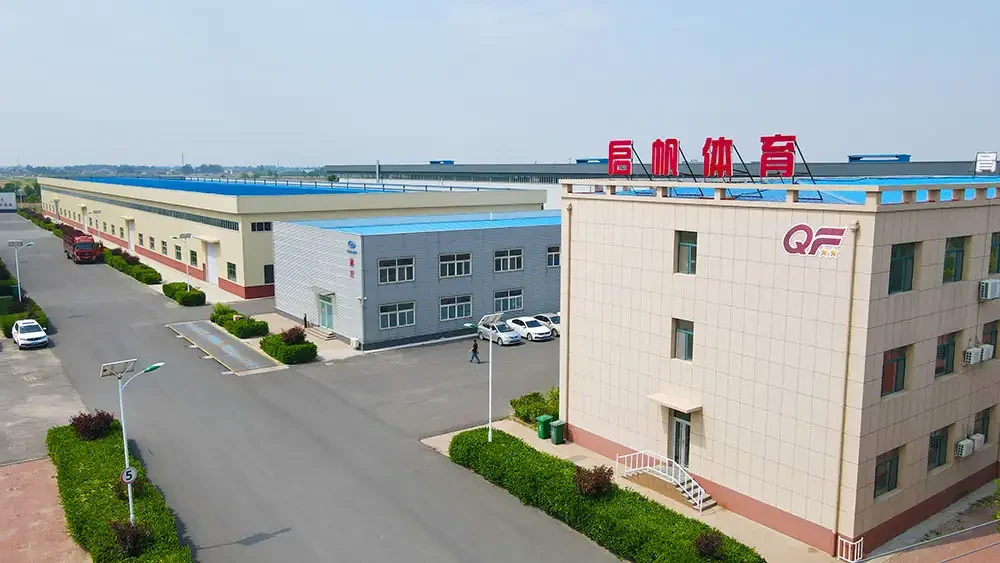
QIFAN’s Eight-Step Manufacturing Process
To maintain consistent product quality, QIFAN applies an eight-step precision manufacturing process covering every stage from material preparation to export packaging.
Premium Steel Material Selection
QIFAN selects:
- Hot-dip galvanized steel tubes
- High-strength SPHC hot-rolled steel
These materials provide excellent structural strength, corrosion resistance, and dimensional stability, helping the court adapt to different outdoor environments.
CNC Laser Cutting and Precision Fabrication
The factory is equipped with:
- Industrial laser tube cutting machines
- Laser plate cutting machines
- Precision bending equipment
Advanced processing technology helps improve component accuracy, ensure better installation matching, and increase overall production efficiency.
High-Strength Welding Process
Steel components are manufactured using:
- Robotic welding
- Experienced professional welders
- Automatic pressure welding
- Full welding processes
These welding methods improve connection strength, reduce deformation, and enhance the long-term stability of the finished structure.
Surface Shot Blasting
Before coating, steel components undergo high-pressure shot blasting to remove:
- Oxide scale
- Dust
- Oil
- Surface impurities
This surface preparation process improves coating adhesion and enhances corrosion protection performance.
Dual-Layer Electrostatic Powder Coating
QIFAN applies a dual-layer powder coating system, including:
- Primer powder coating
- Surface powder coating
This treatment improves:
- Rust resistance
- Coating uniformity
- Outdoor weather resistance
- Long-term appearance
Automatic High-Temperature Curing
Through an automatic constant-temperature curing process, the powder coating forms a stable protective layer bonded to the steel surface.
This improves:
- Coating adhesion
- Scratch resistance
- UV resistance
and helps maintain long-term outdoor performance.
Comprehensive Quality Inspection
Before delivery, QIFAN carries out strict inspections including:
- Steel structure dimensions
- Coating thickness
- Load-bearing performance
- Safety performance
Additional quality checks are also performed for:
- Glass panels
- Lighting systems
- Artificial turf
- Hardware components
to ensure the complete court system meets quality requirements.
Export-Grade Packaging
For international transportation, QIFAN uses:
- Classified component identification
- Reinforced anti-shock packaging
- Export container packaging solutions
These measures help protect components during long-distance shipping and reduce transportation risks.
Reliable Steel Structure Designed for Outdoor Performance
The steel structure is one of the key components that determines the stability and service life of a padel court.
QIFAN’s steel structures are manufactured according to CE EN 1090 steel structure certification requirements and designed for a 2.0 kN/m² wind load. Corrosion resistance is verified through salt spray testing, helping the structure maintain reliable performance in different climates and outdoor environments.
Through professional structural design and corrosion protection treatment, the steel framework provides strong support and long-term durability for padel court installations.
Safety Glass System Designed for Player Protection
The glass wall system plays an important role in both player safety and overall court performance.
QIFAN uses tempered glass that complies with European CE requirements and EN 12150-1 safety standards.
The glass provides high impact resistance. In case of breakage, it forms relatively blunt particles, helping reduce potential injury risks.
To further improve safety and installation reliability, glass edges are carefully polished to reduce stress concentration and minimize the possibility of glass damage.
For overseas transportation, QIFAN uses A-frame export anti-shock wooden crates for glass panels, providing additional protection during long-distance shipping and reducing the risk of breakage.
Professional Artificial Turf System for Outdoor Performance
The artificial turf system directly affects playing comfort, ball performance, and long-term maintenance requirements.
QIFAN uses:
- UV-resistant materials
- High-density grass fibers
- High-Dtex wear-resistant fibers
These materials help improve resistance to aging and wear while maintaining stable outdoor performance.
In addition, the reinforced drainage structure helps accelerate rainwater discharge, reduce water accumulation, and extend the service life of the turf system.
QIFAN’s Customized Padel Court Solutions
Every padel project has different requirements based on available space, application scenarios, design preferences, and operational goals. At HEBEI QIFAN SPORTS INDUSTRY CO., LTD, customized solutions are provided to help customers optimize court layouts, improve space utilization, and create sports facilities that match their project requirements.
Site Planning and Court Layout Design
Based on:
- Available land area
- Required number of courts
- Project objectives
QIFAN provides layout planning support, including:
- Court arrangement
- Space optimization
- Overall project planning
Through practical layout design, customers can make better use of available space while creating a more efficient sports environment.
Customized Court Colors and Branding
To meet different project design requirements, QIFAN provides customization options including:
- RAL frame colors
- Steel structure colors
- Court logo customization
Brand elements can be integrated into:
- Glass panels
- Artificial turf
- Net posts
This helps create a consistent visual identity and improve the overall appearance of the sports facility.
Professional Lighting and Supporting Systems
To improve court usability and long-term performance, QIFAN provides supporting systems including:
- Anti-glare LED lighting systems
- Professional 200W court lights
- 304/316 stainless steel fasteners
These components help enhance nighttime visibility, improve the overall court experience, and support long-term durability.
Conclusion
Building a successful padel facility requires more than simply meeting the standard padel court dimensions. From initial space planning and court layout design to material selection, manufacturing processes, and final installation requirements, every detail can influence the long-term performance and operating value of the project.
For club owners, investors, hotels, and sports facility developers, working with an experienced padel court manufacturer helps ensure that the court is not only designed for current needs but also prepared for long-term use in different environments.
With professional manufacturing capabilities, customized planning support, and strict quality control throughout production, HEBEI QIFAN SPORTS INDUSTRY CO., LTD provides comprehensive padel court solutions designed to meet the requirements of international sports projects.
Frequently Asked Questions
What are the dimensions of a padel court?
A standard padel court measures 20 meters in length and 10 meters in width, providing a total playing area of 200 square meters.
How much space is needed to build a padel court?
In addition to the official court dimensions, projects should allow space for player circulation, spectator areas, maintenance access, lighting, drainage, and entrance pathways to ensure efficient operation.
What is included in a standard padel court?
A standard court consists of the playing area, glass walls, steel structure, net system, and safety clearance area.
Can a rooftop be used for a padel court?
Yes. Rooftop projects require careful structural assessment, space optimization, and safety planning before installation to ensure the court is suitable for the building environment.