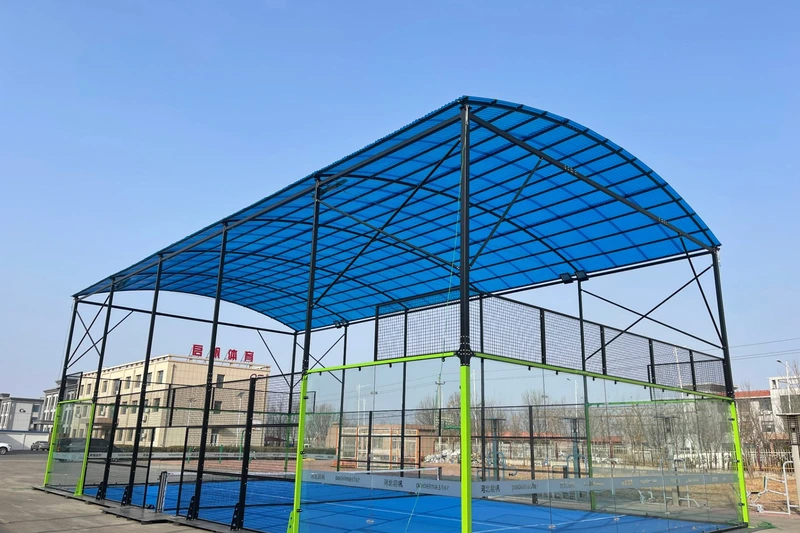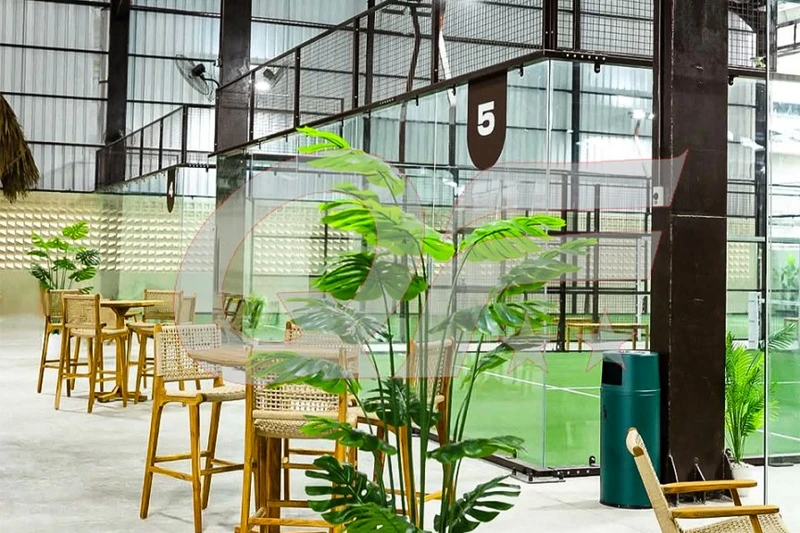
Padel is one of the fastest-growing racquet sports in the world, played on an enclosed 20 × 10 m court where the ball stays in play after bouncing off the glass walls. That single detail shapes everything about how the game is built — and why it is so sensitive to its surroundings. Lobs and rebounds arc high overhead, so players need clear vertical space and unobstructed sight lines, and a court that is wet, sun-glared, or wind-swept quickly becomes frustrating and unsafe.
This is where a padel court cover comes in. By sheltering the playing area from rain and direct sunlight, a covered court delivers more consistent conditions and keeps the game playable in far more weather. This guide walks through the design, materials, and planning decisions behind a covered padel court, so that clubs, sports centers, hotels, and resorts can approach padel court construction with a clear picture of what to look for.
What a Padel Court Canopy Actually Does
Before looking at materials and specifications, it helps to understand what the roof is really for. A padel court canopy is not a cosmetic upgrade and it is not the same as a simple sunshade. It is a structural shelter whose job is to preserve the three things an enclosed court needs: dry, safe footing; clear vertical space for high lobs; and stable, glare-free conditions for players tracking a fast-moving ball.
Keeping the Playing Surface Dry
The most obvious function is waterproofing. Padel is played on artificial turf laid over a firm base, and that turf behaves very differently when wet. A soaked court becomes slippery underfoot, changes the way the ball bounces off the glass, and shortens the life of the turf itself. A waterproof roof keeps direct rainfall off the playing area, so the court stays usable through weather that would otherwise shut it down. In practical terms, this is the single biggest cause of disruption for an outdoor facility — and the one a roof removes most directly.
Protecting the Vertical Playing Space
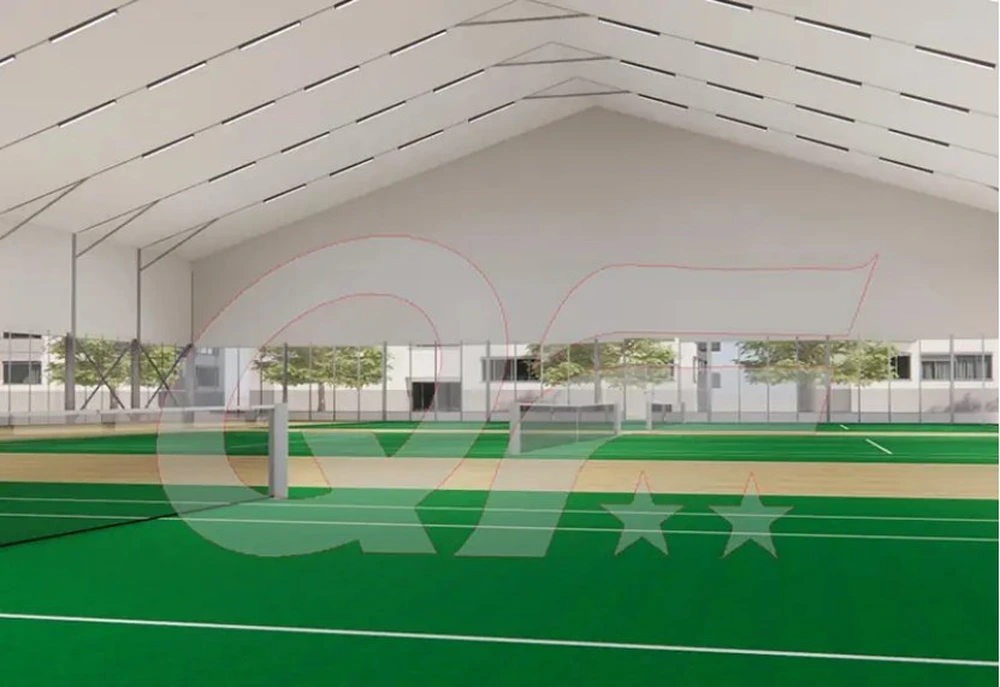
Another function is clearance. Because the lob and the rebounded ball are central to padel, the space above the net is just as important as the space around it. A roof that is too low, or support columns placed inside the playing area, will interfere with the high balls that define the game. A properly designed canopy positions its columns outside the court boundary and holds the membrane high enough — roughly 8 meters of clear height as a planning reference — so that lobs can rise and drop without obstruction.
Managing Sun, Glare, and UV
The third function is light control. Padel is a fast game played against glass, and direct sunlight creates two problems at once: it dazzles players who are looking up at a lob, and it reflects off the glass panels into the eyes of players on the opposite side. An opaque roof membrane blocks that direct sun, cuts glare on the glass, and reduces UV exposure for players, which keeps the court comfortable and playable through the middle of the day rather than only in the morning and evening.
Why Canopy Planning Matters for Padel Court Construction
A padel court canopy is both a construction decision and a long-term business investment. By protecting the playing area from rain and direct sunlight, a roof helps improve court availability, maintain more consistent playing conditions, and support reliable booking schedules. For clubs in rainy or hot regions, this can create more opportunities for year-round operation. Planning the canopy from the start is easier and more cost-effective because the foundations, drainage, and structure can be designed together.
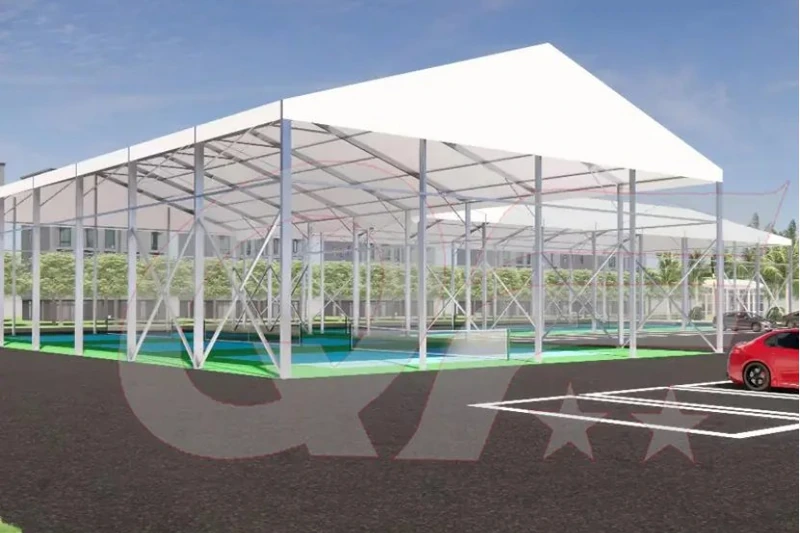
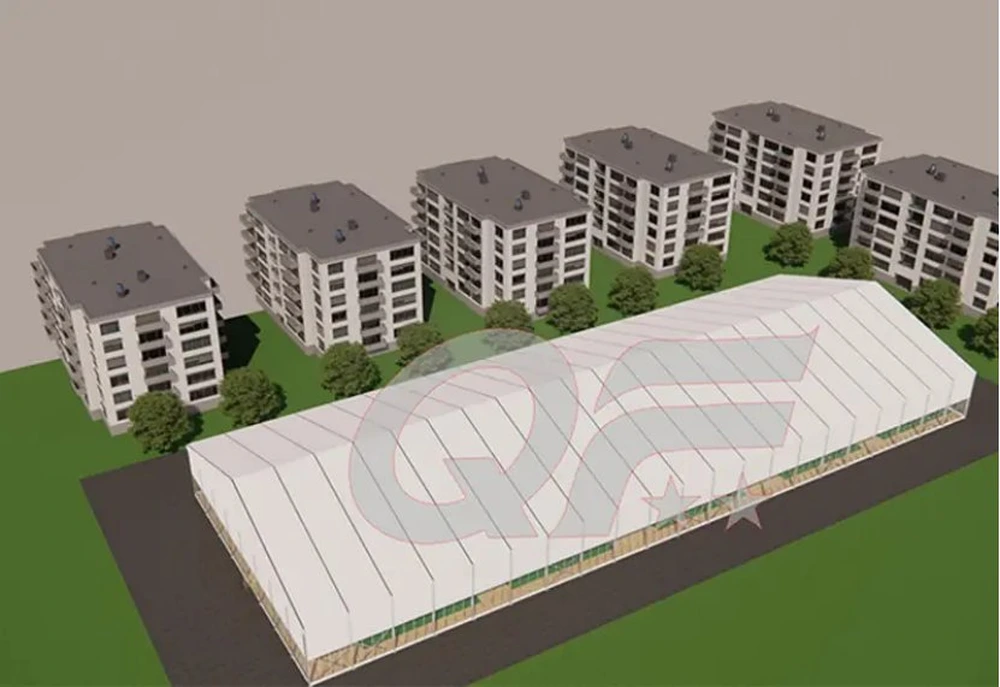
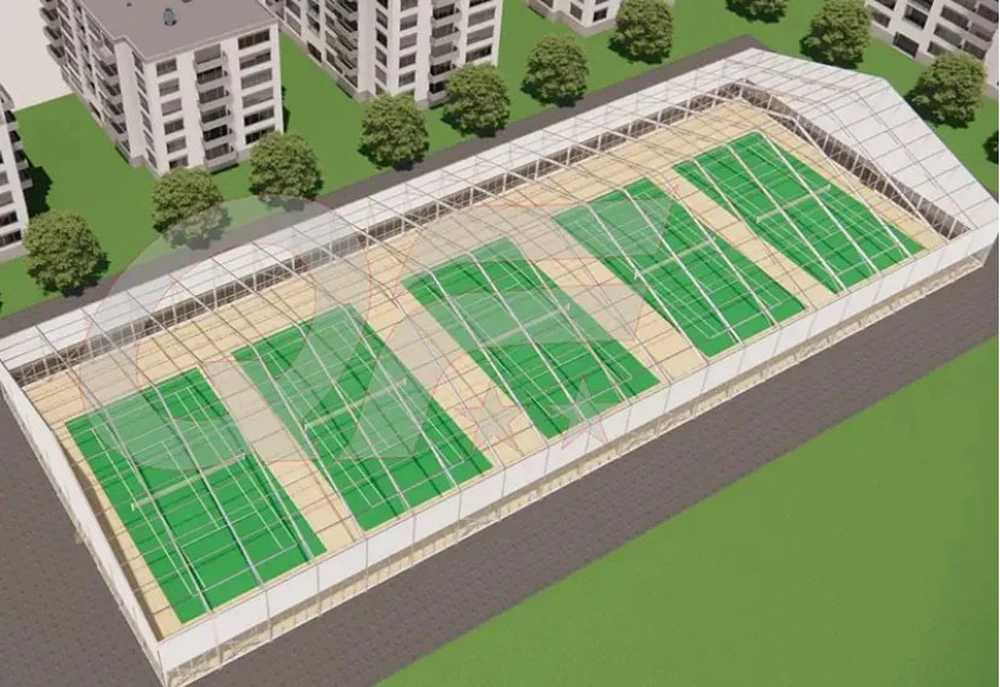
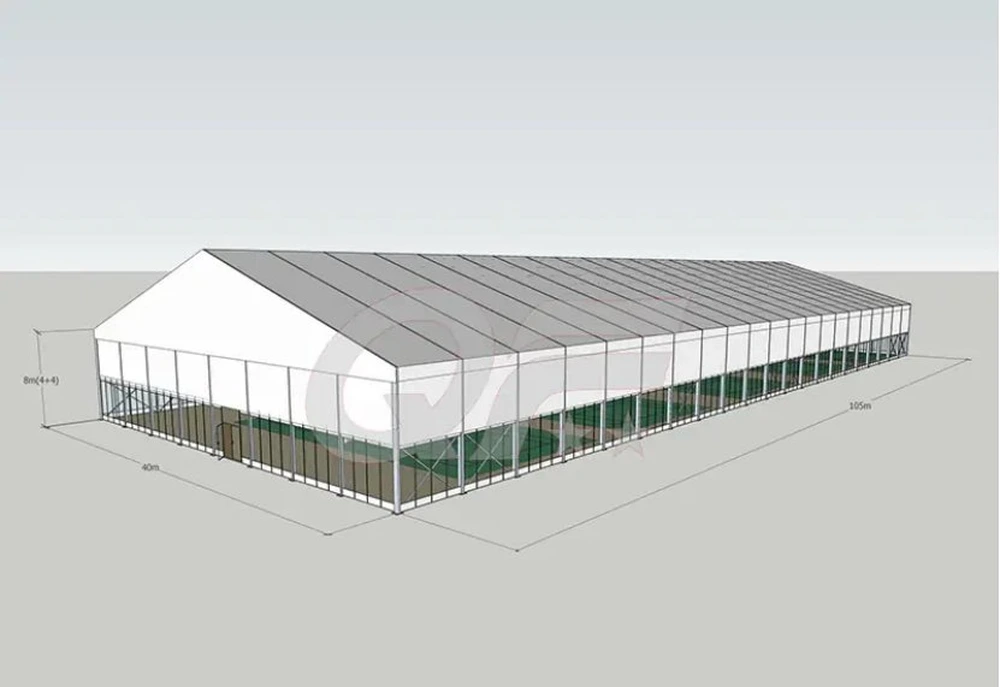
Successful padel court construction starts with the full site layout, not just the playing surface. A standard doubles court measures 20 × 10 m internally, but additional space is needed for the tent structure, support columns, access routes, and maintenance. The layout should be finalized with the supplier before construction begins, taking into account the number of courts, available site dimensions, local climate, and structural requirements. With these factors established, the roof design can be tailored to the project.
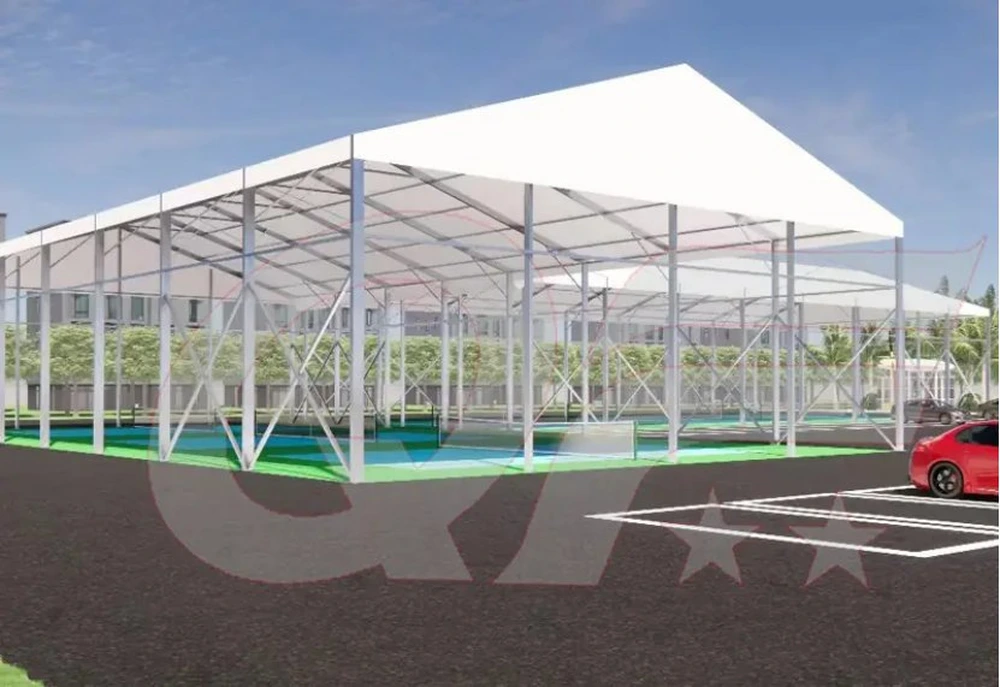
Professional Padel Court with Tent – Custom All-Weather Solutions
To meet these requirements, QIFAN offers a padel court tent roof designed to provide overhead coverage for outdoor courts. Its key specifications, including span, frame materials, roof membrane, and wind resistance, are outlined below.
| Parameter | Value |
| Span | 20–30 m, customizable |
| Wind Load | Up to 120 km/h |
| Roof Material | PVDF/PTFE membrane (850g/m² PVC option) |
| Frame | HDG steel / aluminum |
| Home Court Size | 10 × 20 m |
| Recommended Tent (single court) | 13 × 26 m |
| Recommended Tent (multiple courts) | 13 × (26n) m / 26 × (13n) m |
| Edge Height | 6 m |
The main tent frame uses high-strength 6061-T6 aluminum alloy (203 × 112 × 4 mm profiles, anodized to over 10 μm) for strength, low weight, and corrosion resistance, paired with Q235 hot-dip galvanized steel where the load is concentrated.
The roof covering is an 850g/m² double-sided knife-coated PVC fabric with heat-welded seams, pre-stretched so it stays smooth and tensioned, with a B1 flame-retardant classification and a 10-year design service life.
Wind resistance is rated at Grade 10, engineered for wind loads of up to 120 km/h, with drainage and roof geometry designed to prevent water pooling.
Why QIFAN: One Supplier for Court and Roof
QIFAN delivers the court and the roof as one coordinated solution for covered padel courts, with advantages that extend across every stage of the project:
- One point of responsibility: The court system — galvanized steel structures, 12mm tempered glass, artificial turf, and LED lighting — and the tent roof are specified, engineered, and delivered together, so there is no gap between vendors when something goes wrong.
- Built-in compatibility: Because the roof is planned around the court’s exact dimensions and layout, the support columns, clear height, and drainage are designed to fit from the start, avoiding the retrofit problems that arise when a roof is added to an existing court.
- Custom planning, not a catalog pick: Tent roofing is configured around court quantity, available space, local climate, and project requirements — single court or multiple courts — rather than forcing the site to fit a standard product.
- End-to-end support: QIFAN covers padel court manufacturing, technical specifications, layout planning, and installation guidance, so the buyer works from a single, coherent plan from first drawing to final handover.
The result is a project that moves faster, costs less to coordinate, and fits together the first time. For an operator, that is the difference between managing a construction project and receiving a finished, working facility.
Conclusion: Building a Padel Facility That Works All Year
A padel court cover is the fastest way to turn an outdoor court into a dependable, year-round revenue asset. The decisions that matter most come early, and getting them right at the planning stage is what separates a facility that stays open in every season from one that sits empty when the weather turns.
Choose the right span (20–30 m), reserve the full footprint around the 20 × 10 m court, plan for roughly 8 meters of clear height, and keep the support columns outside the playing area. When the court and the roof are designed together by a single supplier, the result is a venue that stays dry, stays comfortable, and stays profitable regardless of the forecast.
If you are planning a commercial padel club, a hotel or resort amenity, or a multi-court sports center, a custom tent roofing solution from QIFAN can be planned around your exact court quantity, site dimensions, and local climate. Contact our team with your site details and court count to receive technical specifications, layout planning, and installation guidance tailored to your project.
Frequently Asked Questions
What size tent do I need for a single padel court?
For a standard 20 × 10 m doubles court, the recommended single-court tent size is 13 × 26 m. This provides extra space for the tent frame, support columns, access routes, and maintenance outside the playing area.
Is the tent roof waterproof and fire-safe?
Yes. The roof uses 850g/m² double-sided knife-coated PVC fabric with heat-welded seams for waterproof performance, and the membrane carries a B1 flame-retardant classification. The roof has a specified design service life of 10 years.
How much wind can a padel court tent roof withstand?
The QIFAN tent roof is designed for wind speeds of up to 120 km/h.