Why Do Outdoor Padel Courts Need a Cover?
Outdoor padel courts are exposed to rain, direct sunlight, and changing weather conditions. Rain can interrupt matches and leave the playing surface unsuitable for immediate use, while strong sunlight may affect players’ comfort. For commercial padel clubs, these conditions can also affect court bookings and daily operations.
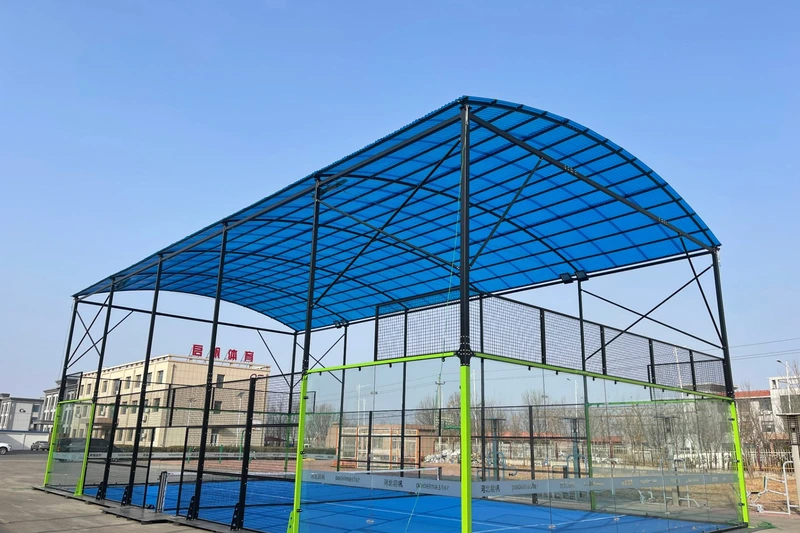
A padel court cover helps reduce the impact of weather on an outdoor playing area. By providing shade and rain protection, a roof can make the court more comfortable to use and help reduce weather-related interruptions. It can also limit the direct exposure of artificial turf and other court facilities to rain and ultraviolet radiation.
However, installing a roof requires more than simply covering the playing area. Buyers need to consider the court layout, available overhead space, drainage, wind loads, structural materials, and the local environment. These factors determine whether a canopy is suitable for a particular site.
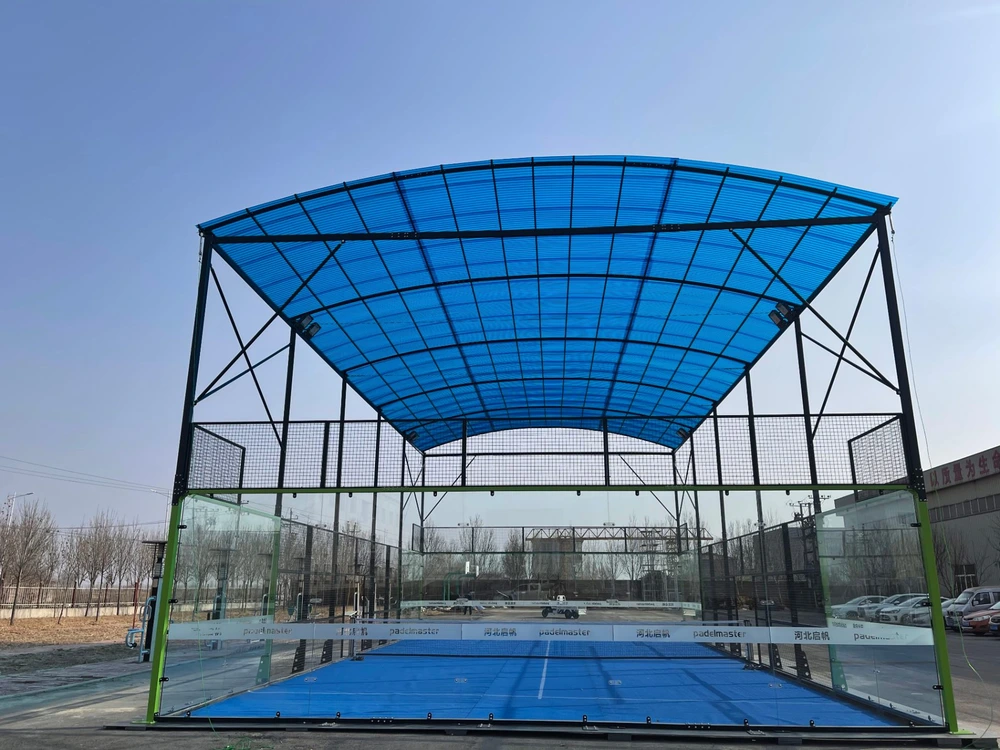
What Should You Consider When Choosing a Padel Court Canopy?
Choosing a suitable padel court canopy starts with understanding the site conditions and the needs of the facility. Several factors should be evaluated before the design is finalized.
Court Layout and Roof Span
The roof should fit the dimensions of the playing area without interfering with access, circulation, or the surrounding facilities. The number of courts, available installation space, and intended use of the venue all affect the required coverage area.
For commercial facilities, an integrated layout can create a more coordinated appearance and make better use of the available space. The roof span should be determined according to the court arrangement and the structural requirements of the project.
Roof Height and Playing Clearance
Sufficient overhead clearance is important for padel because the ball can travel high during play. When planning a roof, buyers should consider not only the highest point of the ceiling but also the position of crossbeams and other structural components.
The lowest clearance above the playing area needs to be checked against the requirements of the intended facility. A roof peak measurement alone does not establish the usable height across the entire court.
Rainwater Drainage
A roof needs an effective way to manage rainwater. Curved roof designs can help guide water away from the surface, while the final drainage performance depends on the roof slope, drainage arrangements, and local rainfall conditions.
Water should be directed away from the playing area and other locations where accumulation could affect facility use. Drainage planning should therefore be considered as part of the overall canopy design rather than as an afterthought.
Wind Resistance and Structural Stability
Wind loads are an important consideration for outdoor sports canopies, particularly where the roof covers a large area. The required structural strength depends on local wind conditions, roof geometry, covering material, support spacing, connections, and foundation design.
Buyers should request project-specific structural calculations rather than relying on a single wind-speed figure. The roof, frame, connections, and foundations need to be considered as one supporting system.
Weather Protection and Light Transmission
Roof materials influence how much light enters the court, as well as the level of weather protection provided. The choice depends on the local climate, the desired playing environment, and the design of the facility.
Buyers should compare material specifications, including waterproofing performance, light transmission, ultraviolet protection where applicable, and suitability for outdoor exposure.
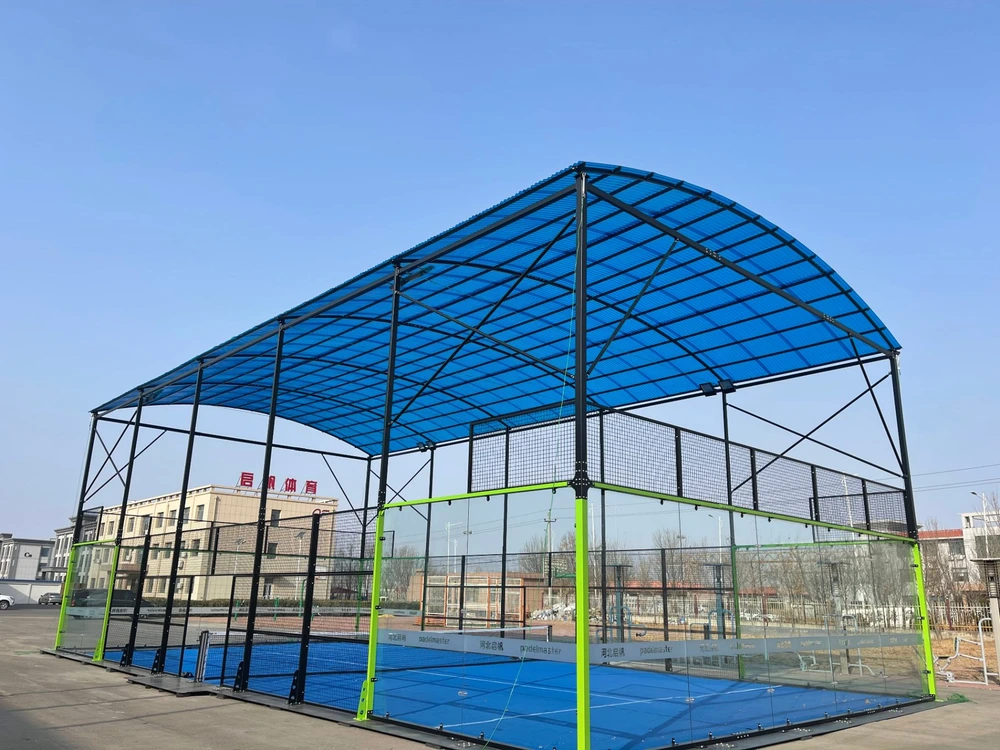
Padel Roof Materials: What Are the Main Options?
Selecting a padel roof involves balancing weather protection, structural requirements, light transmission, appearance, and maintenance considerations. Different covering materials offer different characteristics, so the final choice should reflect the needs of the project.
PC Board Roofing
Polycarbonate (PC) boards are relatively lightweight and offer impact resistance. They can be used in curved roof structures, making them an option for outdoor court coverings.
Light transmission and ultraviolet protection depend on the specific panel grade. Buyers should check whether the selected material provides the required balance of daylight, shade, and UV protection for the intended application.
Panel thickness, support spacing, and compatibility with the roof frame should also be confirmed during the design stage. These factors affect how the panels are incorporated into the overall structure.
PVDF/PTFE Membrane Roofing
PVDF/PTFE membrane materials offer waterproofing and weather resistance and can be used for large-span canopy structures. Depending on the selected specification, different light transmission properties, colors, and membrane configurations may be available.
Membrane roofing can be considered for commercial outdoor facilities where broad coverage and a consistent architectural appearance are important.
How to Compare Roofing Materials
There is no single roofing material that suits every outdoor padel project. PC board may be considered when lightweight panels and specific light transmission options are priorities. PVDF/PTFE membrane may be appropriate for projects requiring a membrane-based covering over a large area.
Before making a decision, buyers should compare the actual material specifications, expected environmental exposure, structural requirements, maintenance considerations, and overall project budget. The roof covering and its supporting frame should be evaluated together.
How Can Covered Padel Courts Benefit Commercial Facilities?
For commercial operators, covered padel courts can offer benefits beyond the physical protection of the playing area. A suitable canopy can influence player comfort, court availability, and the overall presentation of the venue.
More Consistent Court Availability
Rain and strong sunlight can interrupt outdoor play and affect bookings. A canopy helps reduce the impact of these conditions, giving operators more opportunities to keep courts available for matches and reservations.
Improved Player Comfort
Shade and rain protection can make the playing environment more comfortable. The final experience also depends on the roof material, light transmission, site layout, and local weather conditions.
Protection for Court Facilities
Direct exposure to rain and ultraviolet radiation can affect artificial turf and other outdoor components over time. A suitable roof reduces direct exposure, although the level of protection depends on the material and the extent of the covered area.
A More Coordinated Facility Design
An integrated canopy can create a consistent appearance across the court and roof structure. This is particularly relevant for commercial clubs and sports facilities that want the playing area and its supporting structure to form a unified design.
QIFAN Integrated Padel Court Cover Solutions
After the court layout, roof material, drainage, and structural requirements have been established, the next step is to select a canopy configuration that fits the project.
QIFAN provides integrated padel court cover solutions for commercial padel clubs and outdoor sports facilities. The roof and court are planned as a coordinated layout, with customizable dimensions, covering materials, structural configurations, and colors.
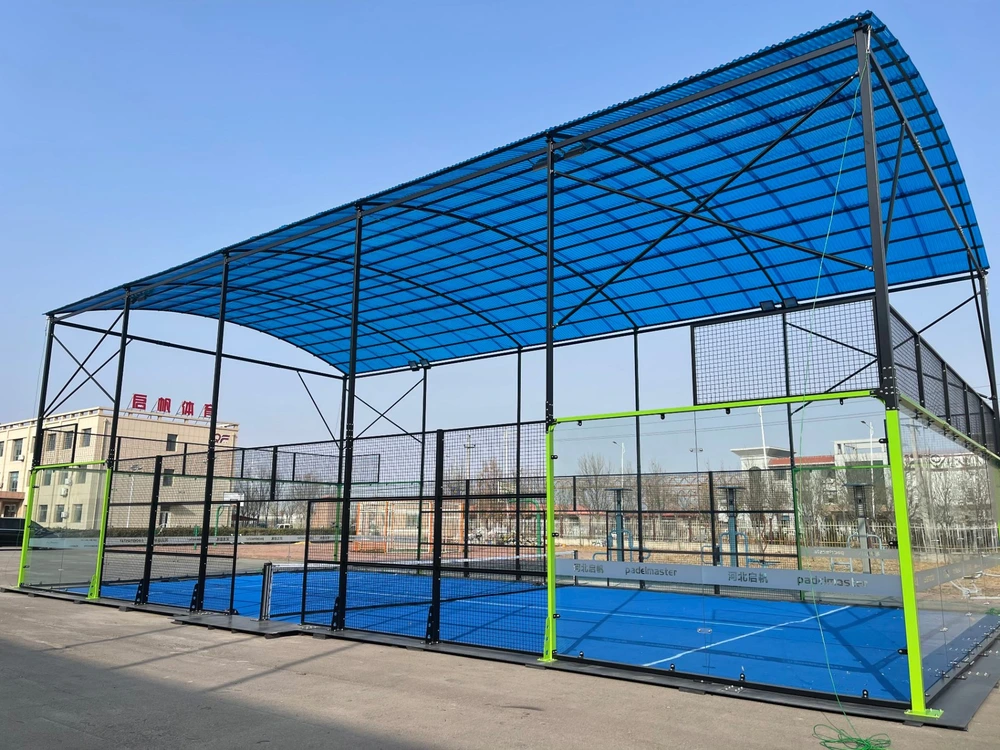
Customizable Dimensions and Roof Structure
The integrated padel court cover can be customized to suit different court layouts and site conditions. The specifications for the listed configuration are provided below.
| Parameter | Specification |
| Length | 20,830 mm |
| Width | 10,530 mm |
| Maximum Roof Height | 8,000 mm |
| Roof Curvature | 11 m |
| Distance from Roof Peak to Highest Crossbeam | 1,500 mm |
| Roof Support Steel Dimensions | 40 × 60 × 2.0 mm |
| Roof Cross Brace Dimensions | 30 × 50 × 2.0 mm |
| Customizable Span | 20–30 m |
The maximum roof height does not represent the actual clear height at every point. The position of crossbeams and the minimum playing clearance must also be considered to ensure sufficient overhead space for play. The final structural design and load-bearing capacity should be verified through project-specific engineering calculations.
PC Board and PVDF/PTFE Membrane Options
The specified PC board configuration uses 2 mm thick panels. The material is lightweight and impact-resistant, while light transmission and ultraviolet protection depend on the selected panel grade.
PVDF/PTFE membrane roofing is also available for projects requiring a membrane-based covering. Membrane specifications, colors, and light transmission can be selected according to project requirements.
Steel Frame and Corrosion Protection
The structural options include SPHC steel and hot-dip galvanized steel. Steel components can be customized in size and color, with surface protection selected to improve durability in outdoor environments.
The manufacturing process combines precision laser cutting, robot-assisted and manual welding, shot blasting and cleaning, automatic electrostatic powder coating, and controlled-temperature curing. These processes help improve cutting accuracy, welding consistency, and coating adhesion, while providing a more uniform surface finish and better protection against corrosion in outdoor environments. Quality inspections cover component dimensions, welding, surface treatment, and connecting parts.
Wind Resistance and Project Customization
The membrane canopy solution offers wind resistance of up to 120 km/h, providing reliable protection and structural stability for outdoor padel facilities in windy conditions. This helps make the covered court more suitable for outdoor use in areas exposed to strong winds.
QIFAN can customize canopy dimensions, roof materials, structural configurations, and colors according to project requirements. For an accurate proposal, buyers should provide the site layout, required coverage area, local environmental conditions, and preferred roof material.
Plan Your Outdoor Padel Court Cover
Choosing a suitable canopy requires balancing roof coverage, playing clearance, drainage, material performance, structural stability, and the needs of commercial operations. Evaluating these factors before installation helps buyers select a solution that fits both the site and the intended use of the facility.
QIFAN offers integrated padel court cover solutions with customizable 20–30 m spans, 2 mm PC board roofing options, and PVDF/PTFE membrane configurations. The specified design has a maximum roof height of 8,000 mm, while final structural specifications and wind resistance should be confirmed for each project.
Contact QIFAN to discuss your padel court layout, roofing preferences, and project requirements.
Frequently Asked Questions
1. What materials are available for a padel court cover?
Common options include PC boards and PVDF/PTFE membranes. The right choice depends on light transmission, weather protection, structural requirements, and project needs.
2. Can a padel court canopy be customized?
Yes. QIFAN offers customizable spans of 20–30 m, with options for roof materials, structural configurations, dimensions, and colors.
3. How wind-resistant is a padel roof?
The specified membrane canopy solution has a stated wind resistance capability of up to 120 km/h. Actual performance depends on local wind loads, structural design, connections, and foundation conditions.