Key Takeaways
· A single padel court is designed for 1v1 play, training, and small sports facilities where space is limited.
· The typical single padel court size is 20m × 6m, while a standard padel court usually measures 20m × 10m.
· The final cost depends on materials, site preparation, transportation, installation, and selected configurations.
· Glass panels, steel structures, artificial turf, and lighting all affect court safety, durability, and playing experience.
· A padel single court allows gyms, hotels, communities, and clubs to add padel facilities without requiring a large installation area.
Introduction
Padel has gained popularity in clubs, hotels, and recreational facilities around the world. As more venues introduce this sport, space planning has become an important part of project development.
However, some locations cannot fit a standard padel court because of limited available space. In these cases, a single padel court provides a practical solution for facilities that want to offer padel with a smaller footprint.
This guide explains the key factors of a single padel court, including dimensions, structure, installation requirements, and cost considerations. It helps buyers understand what should be considered before starting a padel court project.
What Is a Single Padel Court?
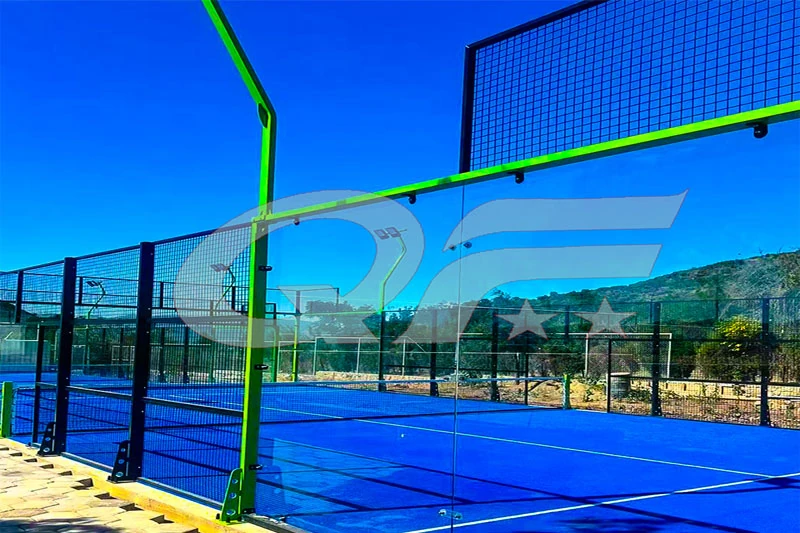
A single padel court is a smaller version of a standard padel court. It is mainly designed for individual training, coaching, and recreational activities.
According to the International Padel Federation (FIP), official padel matches are played on a 20m × 10m court for doubles games. A single padel court is not designed for official competitions. Instead, it is a flexible option for facilities that need a smaller court layout.
Compared with a standard court, a single court requires less space while maintaining the basic playing features of padel. It is commonly used in small sports facilities, hotels, communities, and private venues where installation space is limited.
Single Padel Court Size, Components, and Installation Requirements
Single Padel Court Dimensions and Space Planning
The padel court size is one of the first factors buyers should consider when planning a project.
A typical single padel court size is 20m × 6m, with a playing area of approximately 120㎡. By reducing the width, this design can fit into areas where a full-size doubles court cannot be installed.
However, the playing area is not the only space required. Additional space should be reserved around the court for player movement, maintenance, and installation work. In many projects, an extra 1.5–2 meters around the court is considered during planning. The final layout depends on site conditions and local requirements.
For indoor facilities, a clear height of around 6–8 meters is commonly recommended. This provides enough space for overhead shots and creates a more comfortable playing environment.
For outdoor projects, the installation site should be carefully evaluated before construction. The ground must provide sufficient support to keep the court stable during long-term use.
Key Components of a Single Padel Court
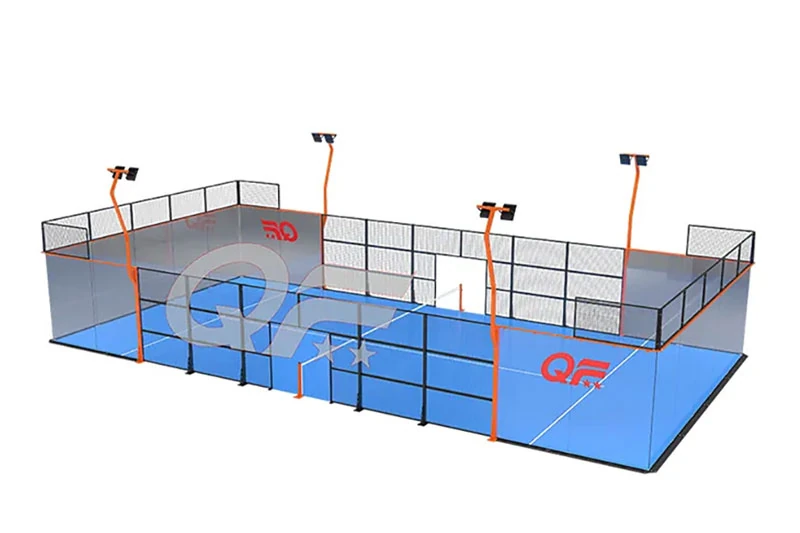
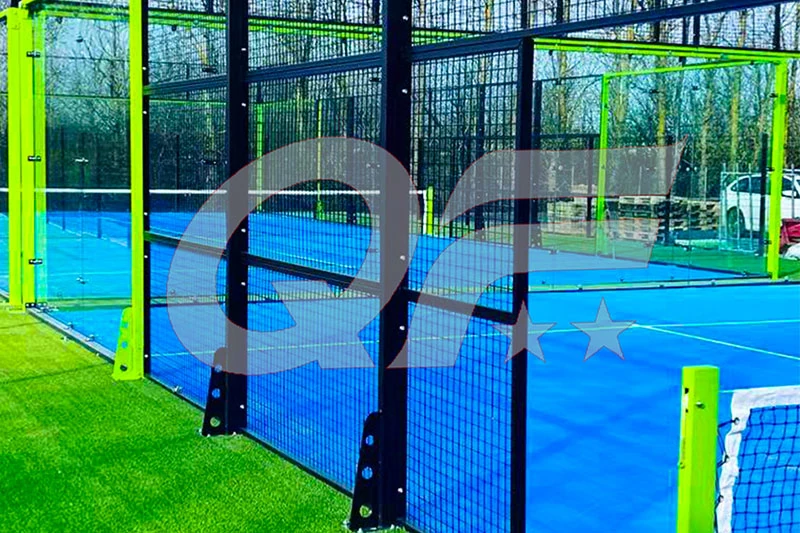
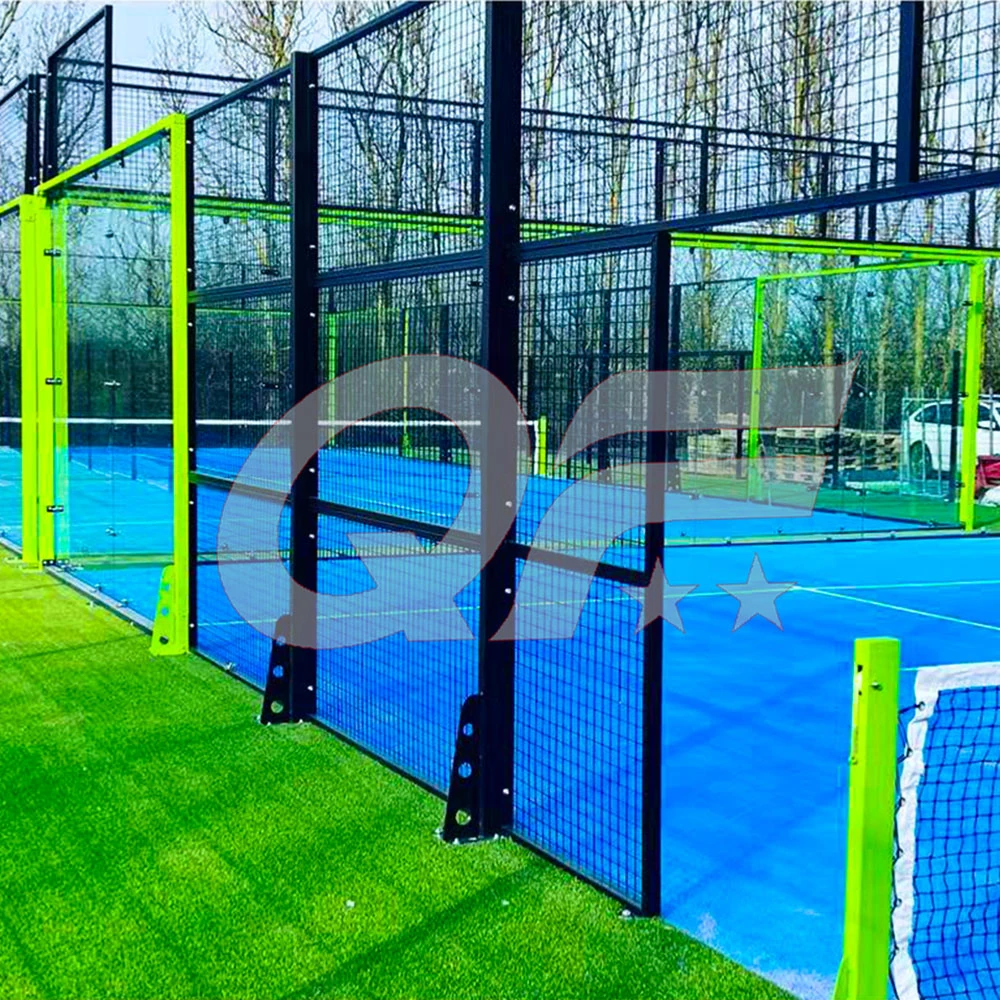
A professional single court padel includes several important components. Each part plays a role in safety, durability, and overall playing quality.
Tempered Glass Panels
Tempered glass is a key part of a padel court because it affects visibility, safety, and ball rebound performance.
Professional courts usually use 10mm or 12mm tempered safety glass. Proper glass processing and accurate installation help maintain stable performance during regular use.
Important factors include:
· Glass thickness
· Tempering quality
· Edge treatment
· Installation accuracy
High-quality glass provides better visibility while creating a safer environment for players.
Steel Structure and Corrosion Protection
The steel structure supports the glass panels and surrounding fencing.
For outdoor courts, suitable corrosion protection is important because the structure is exposed to weather conditions. Common treatments include hot-dip galvanizing and powder coating.
The right protection method depends on the installation environment. For example, coastal areas and locations with high humidity may require stronger corrosion resistance.
Artificial Turf Surface
The turf surface directly affects player movement and ball performance.
A professional padel single court usually uses artificial turf designed specifically for racket sports. A common configuration includes 12–15mm turf height with silica sand infill.
Suitable turf helps maintain consistent ball bounce while providing a comfortable surface for players.
LED Lighting Configuration
LED lighting allows the court to be used during evenings and in areas with limited natural light.
A suitable lighting design should provide clear visibility while reducing glare. Proper placement helps players track the ball more easily during matches and training sessions.
Foundation and Installation Requirements
A stable foundation is essential for the long-term performance of a single padel court.
Before installation, the site should be inspected to ensure the foundation design matches the court structure. Proper preparation helps improve stability and reduces potential problems during operation.
Key factors include:
· Ground conditions
· Concrete foundation
· Drainage design
· Structural anchoring
For outdoor courts, wind resistance should also be considered. The anchoring method needs to match local weather conditions to keep the structure secure.
Single Padel Court vs Standard Padel Court
Choosing between a single padel court and a standard padel court depends on available space and intended use. A standard court is designed for doubles games, while a single court focuses more on training and space-efficient projects.
| Factor | Single Padel Court | Standard Padel Court |
| Court Size | 20m × 6m | 20m × 10m |
| Playing Area | About 120㎡ | About 200㎡ |
| Main Use | Training, 1v1 play, recreational activities | Doubles games and professional matches |
| Suitable Projects | Small facilities, hotels, communities, and private venues | Commercial clubs and large sports facilities |
| Space Requirement | Requires less installation space | Requires more available land |
A standard padel court remains the choice for official doubles matches because it follows competition requirements. A single padel court is more suitable for projects where space availability is a major consideration.
Single Padel Court Cost: What Affects the Investment?
The cost of a single padel court depends on project requirements and installation conditions. Since each project has different designs and construction needs, a fixed price is difficult to provide.
Court Design and Materials
The selected court configuration directly affects the total investment. Factors such as glass thickness, turf specifications, steel structure design, and lighting options can change the final cost.
Different facilities may choose different specifications according to their usage requirements. A training facility may need a different configuration from a commercial padel club.
Site Preparation and Installation
Installation is another important part of the overall budget. Costs may include foundation work, transportation, and on-site assembly.
The final expense can vary depending on project location and site conditions. A well-prepared installation area can help improve construction efficiency and reduce additional work.
Maintenance Requirements
A single court padel project also requires regular maintenance after installation.
Maintenance needs mainly depend on usage frequency and material quality. Regular inspections help keep the glass panels, turf surface, and steel structure in good condition.
Benefits of a Single Padel Court for Small Sports Facilities
A single padel court provides a practical option for facilities that want to introduce padel without investing in a large sports area.
Efficient Use of Available Space
A single court design is suitable for locations where space is limited. It can be installed in smaller venues such as hotels, gyms, communities, and private sports facilities.
With a smaller footprint, operators can add padel activities while making better use of existing areas.
Flexible Training and Recreational Use
A padel single court is suitable for coaching programs and beginner training.
Because it is designed for individual play, coaches can focus on player skills and practice needs. It provides a suitable environment for lessons, skill development, and recreational activities.
Choosing the Right Single Padel Court Solution
When planning a single padel court project, buyers should consider available space, intended use, and required configuration. A suitable design should match the facility’s needs while providing reliable performance for daily operation.
Hebei Qifan provides the PD07 single padel court for projects that require a compact padel solution. With a 20m × 6m design, it is suitable for 1v1 play, coaching programs, and small sports facilities where space needs to be used efficiently.
Compact Design for Space-Limited Projects
The PD07 keeps the standard padel court length while reducing the width. This design allows more flexible installation in locations that cannot accommodate a full-size doubles court.
It is suitable for small gyms, hotels, communities, and private sports areas that want to introduce padel without requiring a large site.
Reliable Court Structure and Configuration
The PD07 includes the essential components required for regular padel activities.
The court can be equipped with:
· Steel structure frame
· Tempered glass panels
· Professional artificial turf
· LED lighting system
Different configurations can be selected according to project requirements. This allows buyers to adjust the court design based on installation conditions and usage goals.
Customization Support for Different Projects
In addition to the standard PD07 design, Qifan provides customization options for different project requirements. The court appearance, structure design, and additional equipment can be adjusted according to specific needs.
Working with a manufacturer that provides complete production and customization support can help buyers develop a padel facility more efficiently.
Frequently Asked Questions
What is the standard size of a single padel court?
A single padel court usually measures 20m × 6m, with a playing area of about 120㎡. It is mainly designed for 1v1 games, training, and small-scale sports facilities.
How much space is needed for a single padel court installation?
The playing area requires about 120㎡, but additional space is needed for player movement, installation, and safety clearance. The final site requirement depends on the project layout and local conditions.
Can a single padel court be used for official competitions?
No. Official FIP competitions use standard 20m × 10m courts for doubles matches. A padel single court is mainly used for training, recreation, and private or commercial projects.
How much does a single padel court cost?
The cost depends on materials, configuration, transportation, installation, and local construction conditions. Buyers should evaluate the complete project requirements before making a decision.
What materials are used for a single padel court?
A professional single court padel usually includes tempered glass, steel structures, artificial turf, fencing, and lighting components. The exact specifications depend on the supplier and project requirements.
Conclusion
A single padel court is a practical solution for facilities that want to add padel while working with limited space. Its compact design makes it suitable for training, recreational activities, and small sports projects.
Before starting a new project, buyers should evaluate the padel court size, material options, installation conditions, and expected usage. Selecting the right court design and a reliable manufacturer can help ensure stable performance and long-term operation.
If you are planning a single padel court project, contact Hebei Qifan for professional support and a customized solution based on your site requirements.