Introduction
When selecting a padel court manufacturer, the differences between low-cost courts and high-performance courts extend far beyond price alone. Materials, manufacturing processes, certification standards, and environmental adaptability all determine the court’s lifespan, athlete safety, and long-term maintenance costs.
Whether you are building a court for a club, a resort, or a school, understanding the constituent elements of a high-quality padel court is the first step in making an investment. In this guide, we will break down the key factors one by one, including structural standards, material quality, performance in extreme environments, and long-term return on investment, to help you compare different padel court manufacturers.
Understanding Padel Court Construction
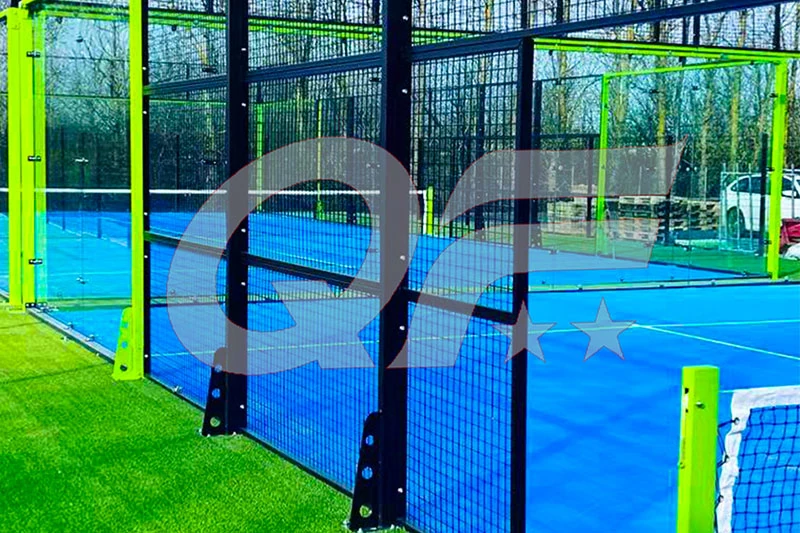
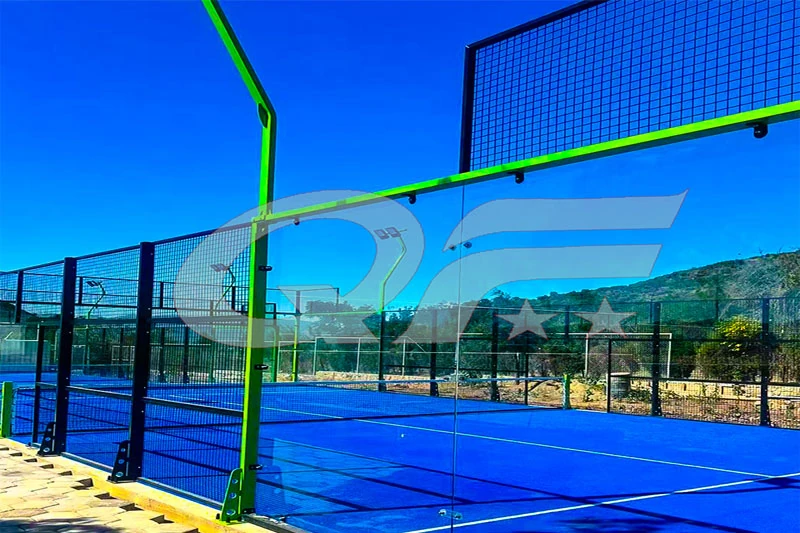
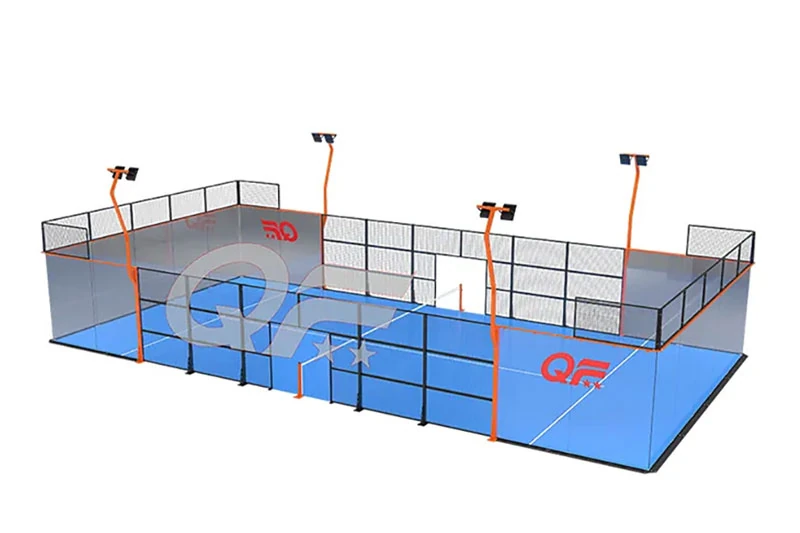
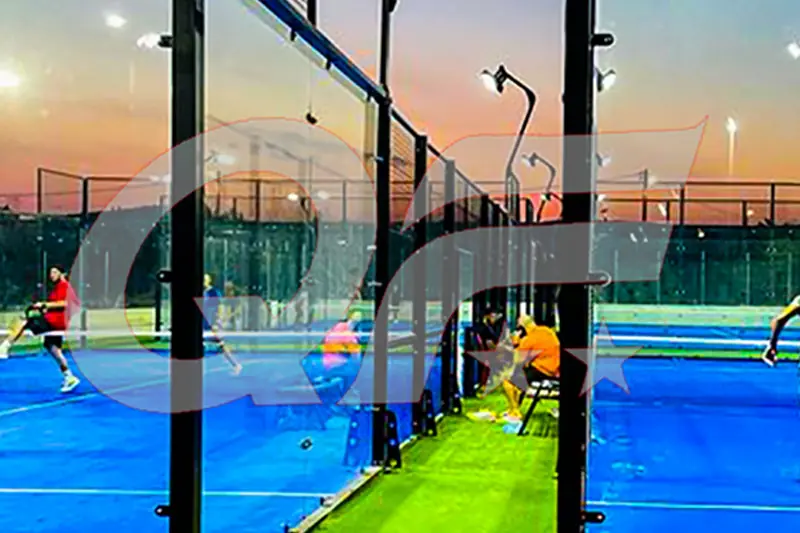
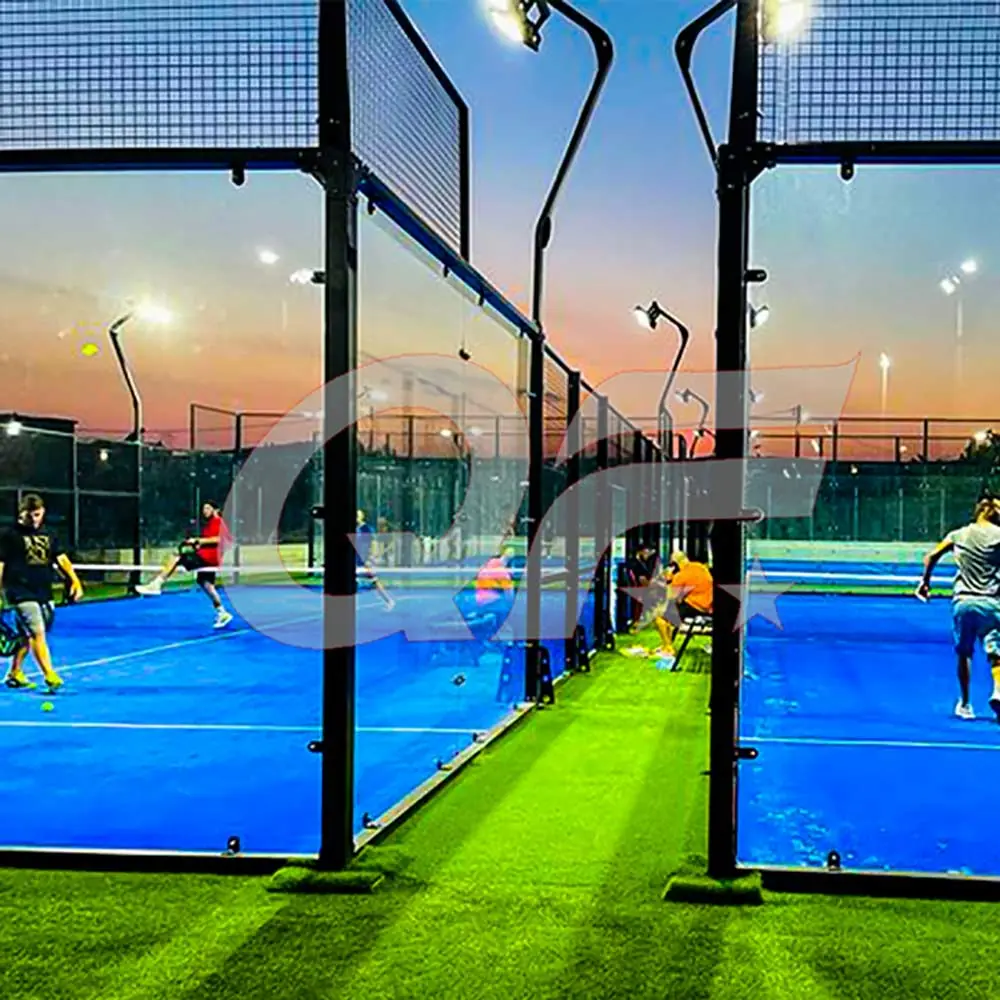
A padel court is a compact enclosed court measuring 20 meters long by 10 meters wide, surrounded by tempered safety glass panels. The sand-filled artificial grass surface not only influences the ball’s bounce behavior but also enhances player safety and impact absorption during movement. The entire court structure is supported by a robust steel framework, ensuring long-term durability and wind resistance. Additionally, a professional lighting system is integrated into the court design to provide consistent, uniform visibility day or night, allowing matches and training sessions to proceed unaffected by natural light conditions.
The standard structure described above meets basic training needs. However, our PD04 Padel Court features targeted upgrades across four core components: tempered glass, artificial turf, steel framework, and lighting system — all manufactured with higher-grade materials and advanced processes. These key differences determine the court’s actual performance, service life, and operating costs.
Certifications & Safety Standards
Certifications are not optional — they are the foundation of trust. A reliable padel ball court must meet international or national safety standards. Our PD04 complies with three key standards: GB 19272–2011 “General Safety Requirements for Outdoor Fitness Equipment”, GB/T20394–2013 “Artificial Turf for Sports” (superior grade), and EN 12150–2:2004 (CE certified toughened glass under EU CPR No. 305/2011). These standards ensure player safety, product reliability, and compliance for international projects.
Material & Process Standards: What Makes a High-Quality Padel Court?
So, what exactly makes one padel court last longer and perform better than another? The answer lies in two areas: materials and manufacturing processes. Below is a comparison between high-quality standards and common alternatives found in the market.
| Dimension | High-Quality Standard | Common Alternatives |
| Material | Galvanized square tubes + SPHC steel | Ordinary steel tubes |
| Manufacturing | Laser cutting + robotic welding + electrostatic coating | Manual cutting + traditional welding |
| Lifetime | ≥12 years | 8–10 years |
The above comparison shows that differences in materials and manufacturing processes directly affect product lifespan. Our PD04 is precisely designed and manufactured to meet the high-quality standards shown on the left side of the table — featuring galvanized materials and automated precision manufacturing, which provide better corrosion resistance, a uniform coating, and stronger welds. As a result, it achieves a service life of over 12 years, far exceeding the 8–10 years of lower-spec courts.
Extreme Environment Performance
Extreme environments can affect the service life of a paddle court. In coastal areas, for example, salt spray accelerates steel corrosion. In regions with intense sunlight, UV radiation causes coating fading and cracking. In high-wind zones, structural loads demand professional engineering calculations. Therefore, in such environments, a well-designed paddle tennis court typically features three characteristics: multi-layer UV protection coating, anti-corrosion treatment suitable for coastal installation, and wind load analysis with structural reinforcement.
Our PD04 incorporates all three of these environmental protections. With its multi-layer UV coating, professional anti-corrosion treatment, and engineering-verified wind load reinforcement, it can operate stably in resorts, seaside clubs, rooftop courts, and other challenging environments.
How to Evaluate the Long-Term Value of a Padel Court
For clubs, hotels, resorts, and schools, a padel court is not just a facility — it’s an investment. When evaluating the long-term value of a court, three metrics matter most: energy cost, maintenance cost, and service life.
Energy-efficient lighting can significantly reduce electricity bills. Durable materials and quality manufacturing lower the frequency of repairs and replacements. And a longer service life means a better return over time.
For reference, our PD04 achieves 23% annual energy savings, a 15% reduction in maintenance costs, and a service life that extends 4+ years beyond ordinary courts — gains made possible by advanced materials, automated manufacturing, and energy-efficient lighting integration.
Step-by-Step Buying Guide
Step 1: Assess your needs and space
Indoor or outdoor padel court? Coastal or inland? Commercial or school use?
Step 2: Compare padel court suppliers by certifications, materials, and case studies
Do not only compare price.
Step 3: Request a detailed quote and installation plan
Check packaging (export-grade is safer for overseas projects).
Step 4: Installation and after-sales support
A good supplier provides installation guidance and warranty.
Project Spotlight: United Kingdom
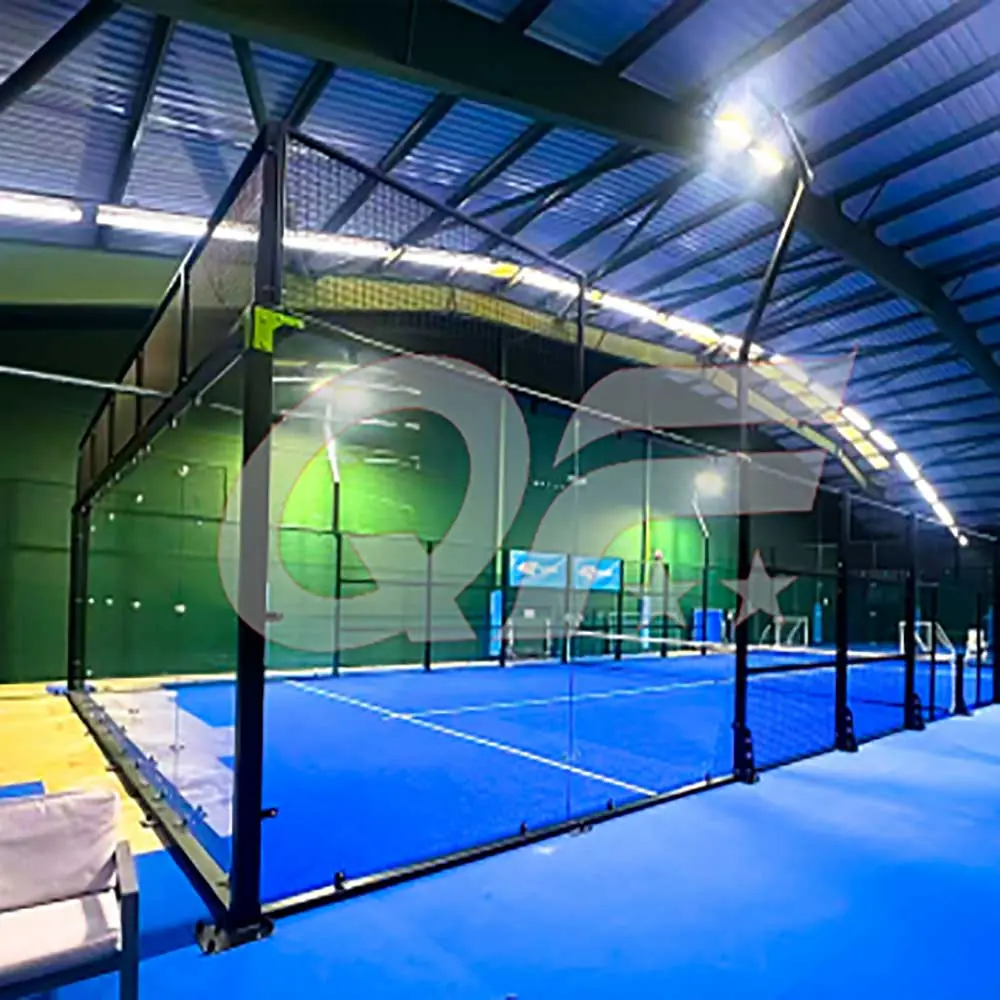
In the UK, where weather conditions often push play indoors, one commercial sports facility needed a space-efficient, high-performance padel court solution. We delivered our PD04 — optimized for indoor installation with flexible structural design, high-quality artificial turf, durable steel framework, and professional lighting integration. The result? Consistent playing conditions year-round, high utilization rates, and a loyal player base that ensures stable recurring revenue for the client.
Conclusion
A padel tennis court represents a long-term investment. High-quality materials, precision manufacturing, and official certification directly impact safety, durability, and operational costs. Our PD04 model offers a service life of over 12 years, delivers 23% energy savings, and reduces maintenance costs by 15%. If you are interested in our products, please feel free to contact us for a detailed quotation or a customized solution.
FAQ
Q: Can I customize the court with my brand?
A: Yes, we provide customization for structure color, turf, logos, and sponsor branding.
Q: Do you provide installation support?
A: Yes, we offer manuals, videos, and engineering guidance; on-site supervision is optional.
Q: How long is production and shipping?
A: Production is 20–30 days after deposit. Shipping depends on destination port.