1. Introduction
Investing in and building a padel tennis court is a major capital decision, but not all courts are built to the same standards. While low-cost solutions may seem appealing at first glance, they often harbor hidden dangers—from safety hazards and frequent repairs to high maintenance costs and even premature structural failure.
We will provide you with a detailed explanation of key certification requirements (including GB and CE standards), the three core returns of quality construction, customized solutions for special space environments such as warehouse conversions, and a concise pre-contract checklist, using real-world examples—such as the PD14 stadium model and a successful case study in Madrid.
2. Technical Standards and Certification Requirements for Padel Courts
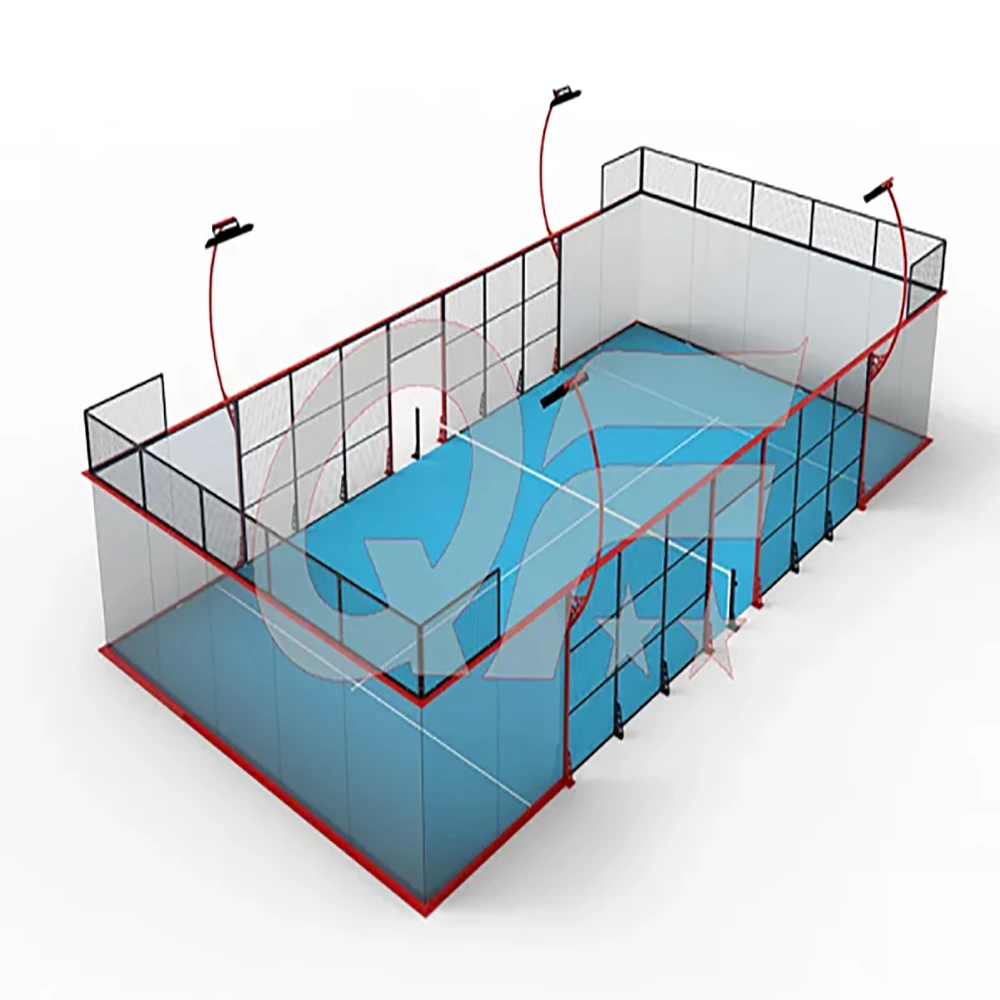
A reliable padel court must meet safety and performance standards. Take the PD14 as an example:
Structure – Complies with GB 19272-2011, no safety hazards during use
Turf – Meets GB/T 20394-2013 “Superior Grade” – consistent ball bounce, good drainage, reliable traction
Glass – CE certified under EN 12150-2:2004 – high impact resistance, safe if broken
When reviewing a contractor’s proposal, always ask for written proof of all certifications.
3. Three Core Returns on Investing in High-Quality Padel Courts
First, lower long-term operating costs. A high-quality padel court can reduce long-term operating costs. For example, the PD14 has a service life of 12 years or more.
Second, improved player safety and satisfaction.
Take our case as an example: an outdoor sports club in Madrid, Spain.
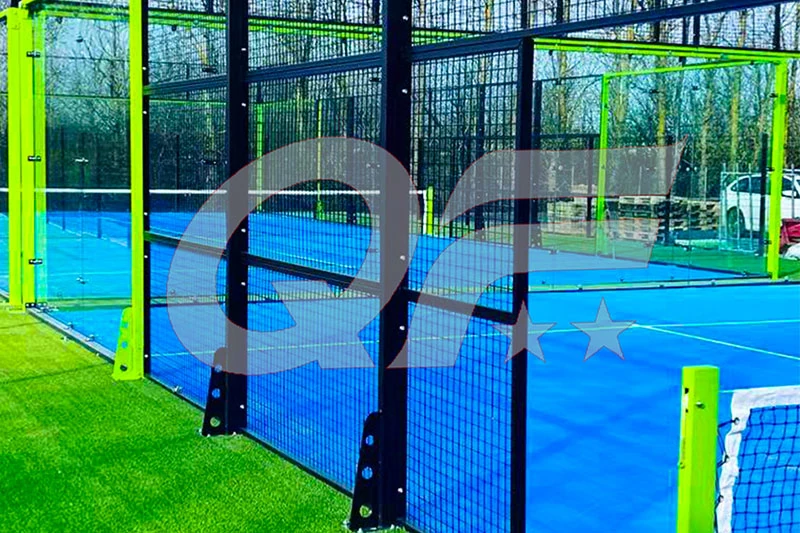
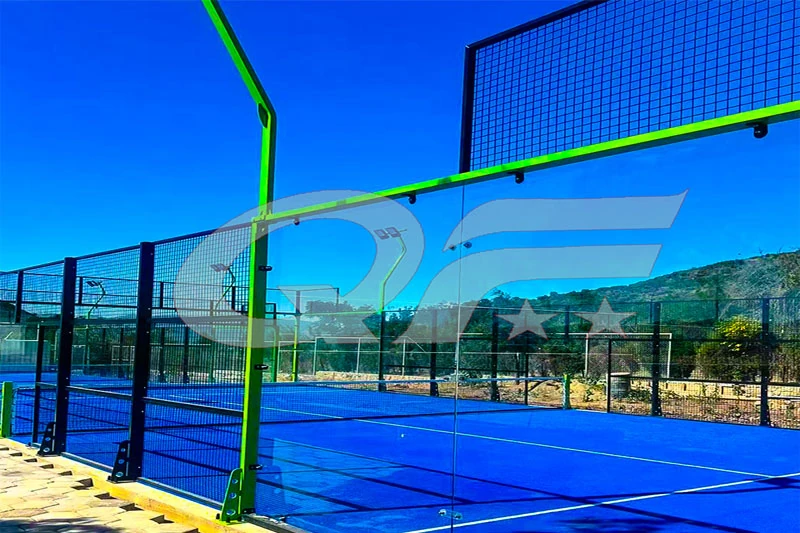
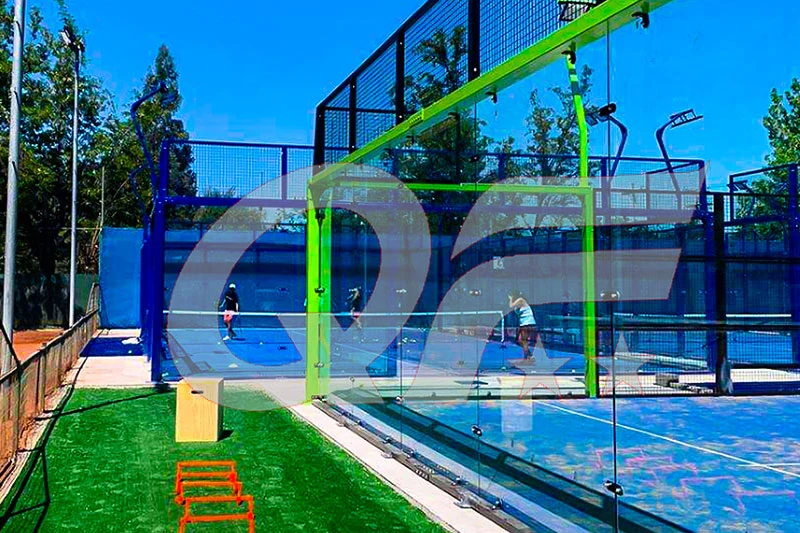
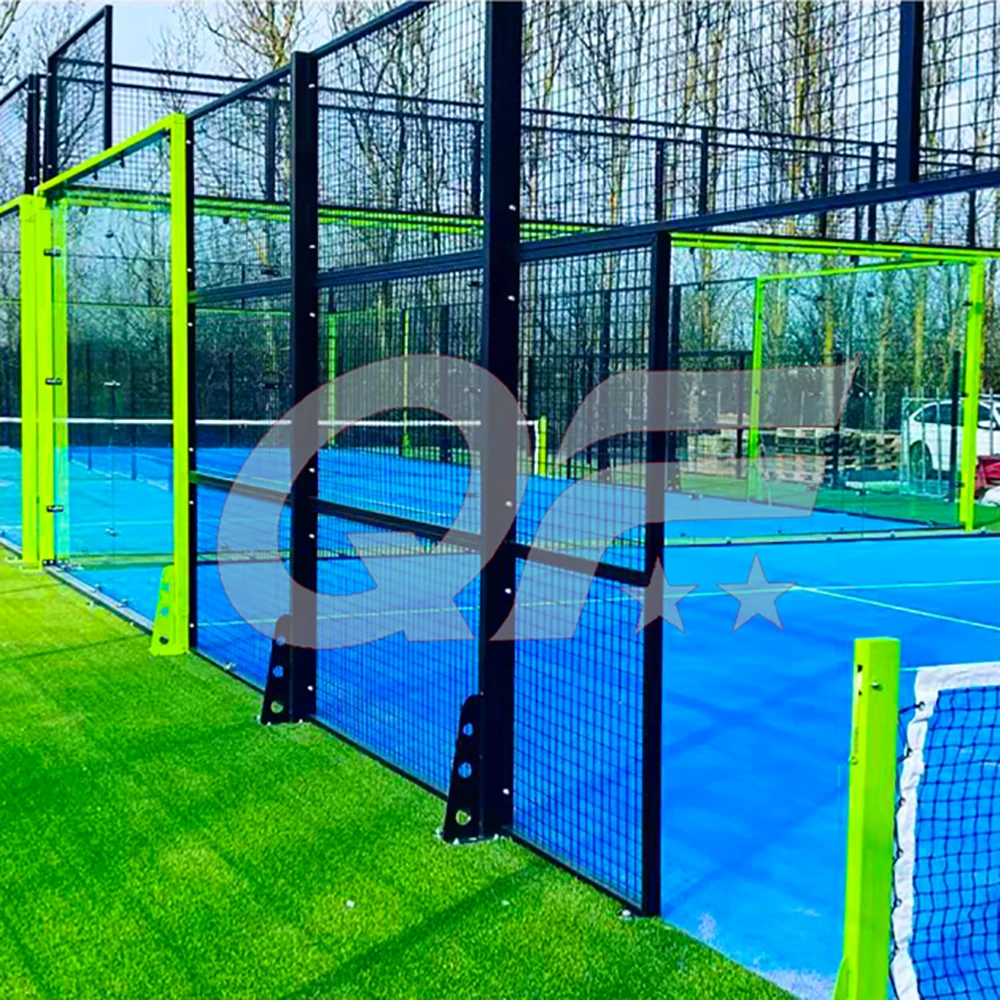
The club’s existing courts had exposed bolts, creating safety hazards and an unprofessional look. Outdoor steel frames were also prone to corrosion, driving up maintenance costs. After installing the PD14 Special-Shaped Steel Pipe Panoramic Padel Court — featuring embedded screws for a smooth surface, high-strength steel beams for stability, and corrosion-resistant materials — safety improved immediately, aesthetics were enhanced, and maintenance costs dropped. Within three months, the club reported higher member satisfaction and increased court bookings.
Third, support for revenue diversification. A high-quality court structure can adapt to mixed-use environments, while a low-quality court becomes a liability.
4. Customization Capabilities: From Standard Courts to Warehouse Conversions
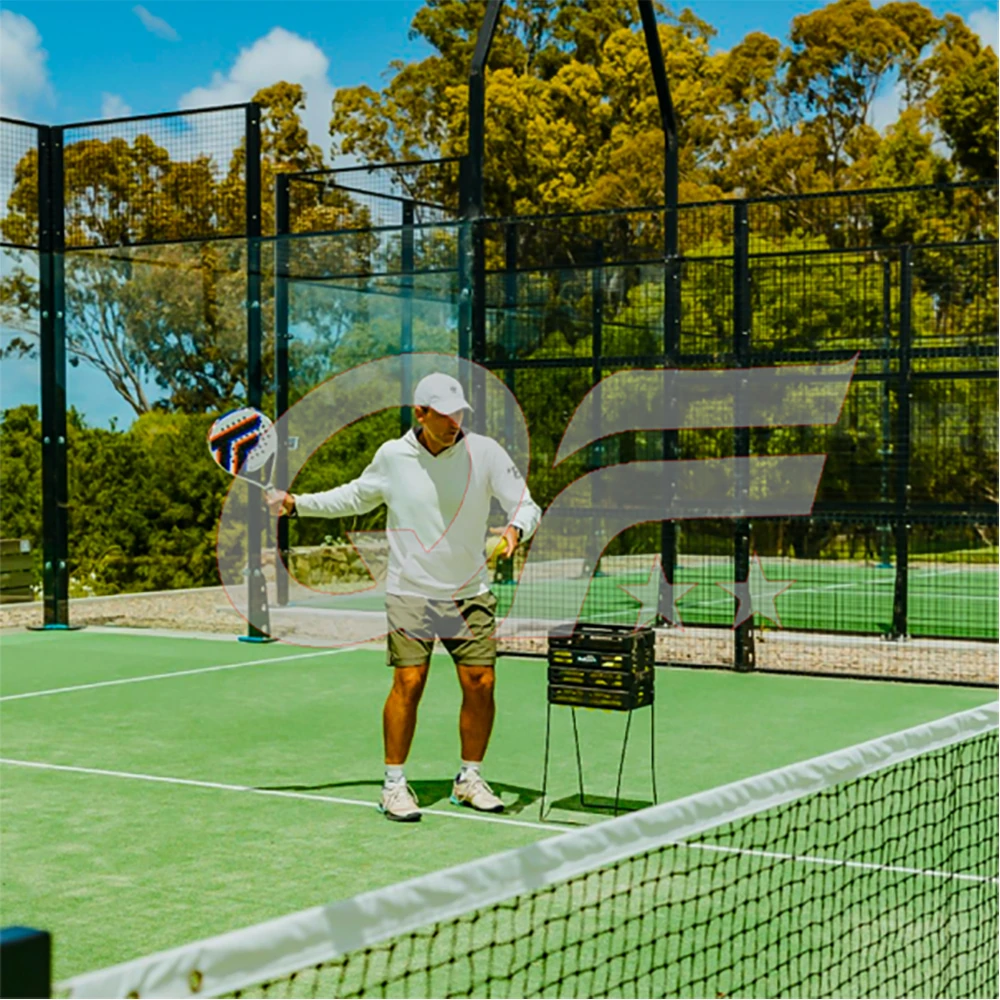
Not every project is the same. Take the Northampton warehouse renovation project mentioned in BBC news as an example: this 2.4-acre industrial building will be transformed into 9 courts, a café, changing rooms, and other supporting facilities. Therefore, contractors need to be highly flexible and skilled in space planning.
This is where the PD14 series shines. Its special-shaped steel pipe design enables flexible and varied layouts. The embedded bolt structure ensures easy and convenient installation even in irregular spaces. Additionally, this product series remains as strong as ever in high-temperature environments exceeding 45°C, effectively resists rust in humid conditions, and uses reinforced beams with hidden fasteners to ensure safe and secure connections.
5. Key Criteria for Evaluating Padel Court Manufacturers
5.1 Materials & Processes: The Core Dividing Line of High-Quality Manufacturers
The padel court manufacturer of PD14 uses galvanized square tubes (inside and outside) and SPHC steel , offering high corrosion resistance, a smooth surface, and excellent toughness. Competitors mostly use ordinary steel tubes with lower corrosion resistance. The PD14 also uses export-grade packaging to minimize transport damage.
5.2 Can the Supplier Provide a Complete Integrated System?
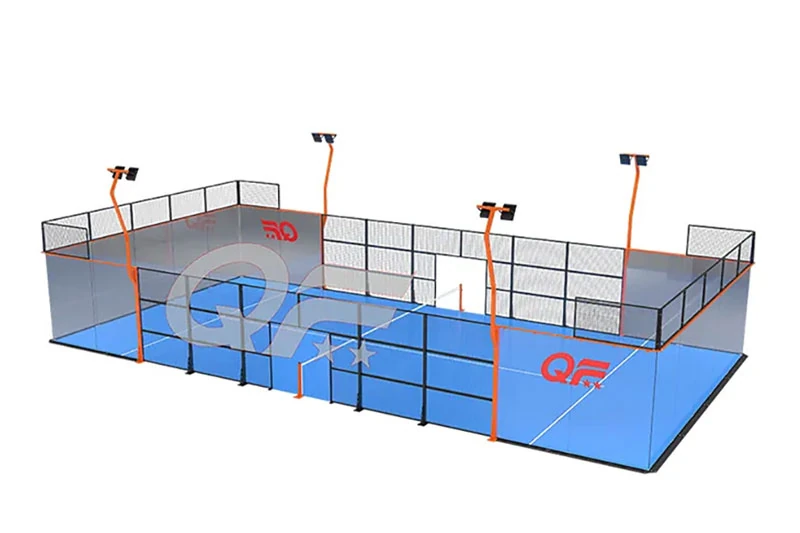
The PD14 is a complete system including steel structure, safety glass, artificial turf, lighting, and drainage. Its special-shaped steel pipe design provides an elegant appearance, and embedded screws create a smooth, seamless exterior – which is precisely the solution to the exposed bolt problem in the Madrid case study mentioned above.
6.Simple Checklist Before Signing a Contract
Before selecting a contractor, be sure to know these four questions. First: Which components are covered by a warranty, and how long does that warranty last? Second: How often will I need to inspect the site? Third: Do you keep spare parts in stock? Fourth: If I require assistance, whom should I contact—and will they respond in a timely manner? A trustworthy contractor will provide clear and definitive answers.
7. Cost Analysis: Don’t Be Fooled by Low Prices
Comparing Initial Investment vs. Long-Term Costs
| Comparison | Our Product | Competitor |
| Material | Galvanized steel tubes (inside and outside) + high-strength steel – rust-resistant, smooth, tough | Ordinary steel tubes – rusts easily |
| Process | Laser cutting + robot welding + fully automatic coating | Manual cutting + traditional welding + basic painting |
| Lifespan | Strict quality control, ≥12 years | Loose quality control, 8–10 years |
8.FAQ
Q1. How long does a PD14 padel court last?
More than 12 years. Competitors typically last only 8–10 years.
Q2. What certifications does the PD14 have?
GB 19272-2011 (structural safety)
GB/T 20394-2013 Superior Grade (turf)
CE certified under EN 12150-2:2004 (safety glass)
Q3. What was the result of the Madrid case study?
Within three months: higher member satisfaction and increased court bookings. Safety improved, aesthetics enhanced, maintenance costs dropped.
Q4. What should I ask a contractor for?
Written proof of all certifications (GB, CE, etc.) and clear aftersales service terms including warranty, maintenance schedules, spare parts availability, and technical support.
9.Summary
If a padel tennis court is of inferior quality and requires frequent repairs, your capital will be gradually drained away, bit by bit. Conversely, a high-quality court can truly become a veritable “money-printing machine.” Take our Model PD14, for instance: it features a unique structural design utilizing specially engineered, custom-profiled steel tubing. This model has obtained a full suite of relevant certifications and can be used continuously for up to 12 years without the risk of any major malfunctions. If you are interested in our products, please feel free to contact us at any time to request a quotation.