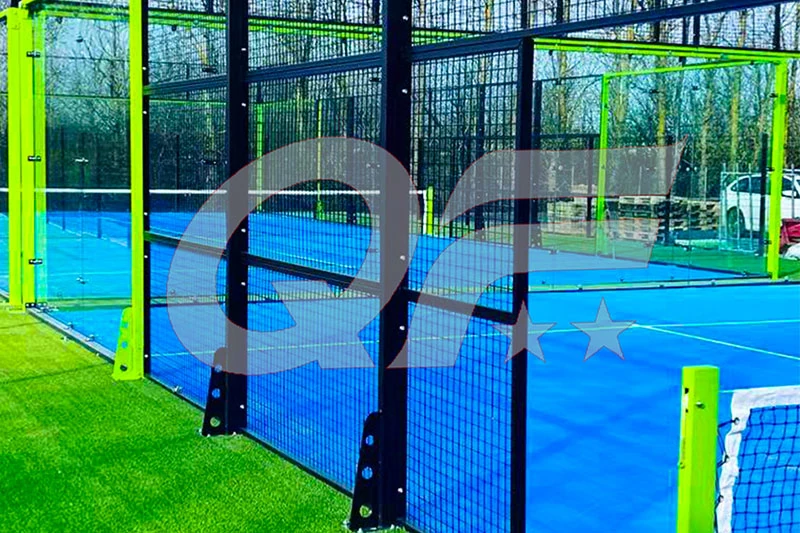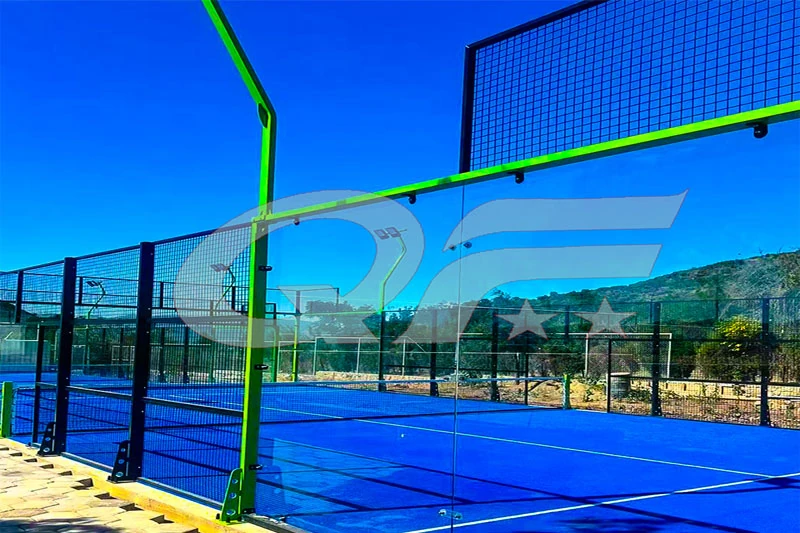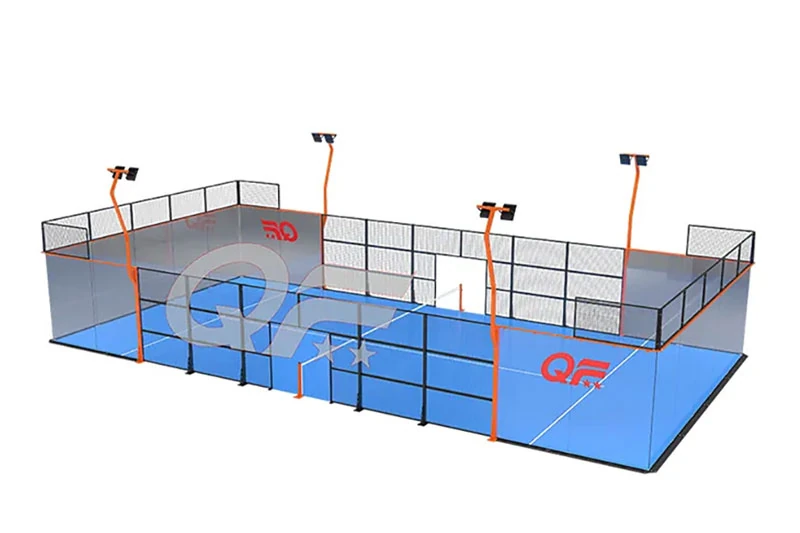
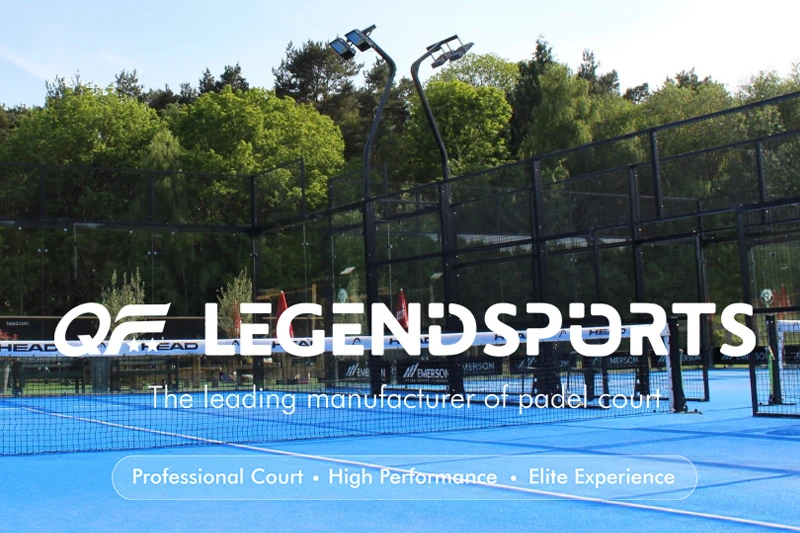
The global padel market is expanding rapidly. For club owners and sports project investors, selecting a reliable padel court factory is one of the most critical decisions they will face. The wrong choice can lead to frequent repairs, player safety issues, dissatisfied members, and ultimately, project failure.
This guide outlines five essential factors to evaluate when choosing a best padel court manufacturer, helping you make an informed decision for your next project.
1. Company Strength and Production Capacity
A manufacturer’s track record speaks volumes about their reliability. Before signing any agreement, examine how long the company has been in operation and whether they have the production capacity to handle projects of your scale.
Established manufacturers typically have refined their production processes over many years. They understand the common pitfalls in padel court construction and have developed solutions to address them. Production capacity is equally important, especially for commercial clubs planning multiple courts. A manufacturer capable of producing 1000+ sets annually demonstrates the ability to scale production and meet tight project deadlines.
International experience matters significantly. Manufacturers who export to diverse markets understand different climate conditions, regulatory requirements, and installation practices. Exporting to regions ranging from Europe to the Middle East to Southeast Asia requires adaptability and knowledge of international shipping logistics.
2. Certifications and Compliance Standards
Certifications serve as a credible endorsement of product quality and safety. When evaluating a manufacturer, it is important to understand which technical standards their products comply with and what those standards actually mean for your project.
For padel courts, structural safety is the top priority. Products entering the European market typically require CE certification. However, what matters more is whether the steel structure meets established execution standards and loading requirements. These standards determine whether the court framework can remain stable over years of use, particularly under snow loads, heavy rain, or strong wind conditions.
Wind load resistance is another specification that deserves close attention. This rating, measured in kN/m², indicates how much wind pressure the structure can withstand. For clubs located in coastal regions, open plains, or areas prone to typhoons and storms, choosing a manufacturer with proven wind resistance capability is essential for both safety and longevity. Higher ratings indicate stronger performance in demanding weather conditions.
Beyond specific certifications, it is also worth examining whether a manufacturer maintains standardized quality management throughout their operations. From raw material sourcing to production and final inspection, consistent quality control processes ensure that every product leaving the factory meets the same reliable standards.
3. Manufacturing Quality and Technical Capabilities
The longevity and safety of a padel court depend heavily on manufacturing quality. When assessing a manufacturer, consider the following production factors.
Raw material selection forms the foundation of durability. Courts constructed with galvanized steel tubing and high-quality steel grades resist corrosion far better than untreated alternatives. This is particularly important for outdoor installations exposed to rain, humidity, and UV radiation.
Precision processing ensures components fit together correctly during installation. Manufacturers using CNC laser cutting can achieve tighter tolerances, reducing on-site assembly errors and ensuring structural integrity.
Welding quality directly impacts structural stability. Automated welding processes produce consistent, uniform welds that are stronger than inconsistent manual welding. The mesh frames of padel courts particularly benefit from automated press welding and full welding techniques.
Surface treatment protects steel structures from environmental degradation. A complete treatment process includes:
- Shot blasting to remove rust, oxides, and contaminants before coating
- Electrostatic powder coating to create an even, durable protective layer
- Temperature-controlled curing to ensure the coating bonds strongly to the steel surface
This multi-step process produces a finish that resists corrosion, abrasion, and UV damage, maintaining both appearance and structural integrity over many years.
Quality inspection before shipment is non-negotiable. Every component, from steel structures to glass panels to lighting systems, should undergo thorough inspection to confirm they meet design specifications and export standards.
Export-grade packaging protects products during long ocean voyages. Proper packaging reduces damage risks and ensures courts arrive in perfect condition at their destination.
4. Proven Project Experience
Past projects offer tangible evidence of a manufacturer’s capabilities. When evaluating suppliers, ask for case studies relevant to your project type and location.
Key questions to ask when reviewing case studies:
- Was the project completed on schedule?
- Did the client express satisfaction with quality and performance?
- How was installation support and after-sales service handled?
- Does the project face similar climate or usage conditions to yours?
5. Installation Services and After-Sales Support
The relationship with a manufacturer should not end when products are delivered. Installation and after-sales support determine whether your project runs smoothly and continues to perform well over time.
Installation guidance is essential, especially for projects where local construction teams may lack padel court experience. Detailed installation drawings and remote technical support can prevent costly installation errors. Warranty coverage protects your investment. Industry standards typically offer:
- Extended warranties for steel structures (reflecting their durability)
- Intermediate coverage for tempered glass panels
- Standard coverage for electronic components and accessories
Responsive after-sales service ensures problems are addressed promptly when they arise.
Qifan: A Comprehensive Solution Provider
Based on the evaluation criteria above, Qifan demonstrates the characteristics of a reliable padel tennis court manufacturer.
Company Profile
Established in 2013 with over 12 years of industry experience
40,711㎡ manufacturing facility
Annual production capacity exceeding 1000 sets
10+ years of export experience to over 50 countries
Global Reach
Primary markets include Europe, North America, Southeast Asia, Latin America, and the Middle East
Exporting to United States, Mexico, Canada, Australia, United Kingdom, Germany, France, Spain, Italy, Saudi Arabia, UAE, and many other countries
Certifications
CE Certification compliant with EN 1090 and EN 1991 standards
ISO 9001, ISO 14001, and ISO 45001 management system certifications
Wind load resistance rating of 2.0 kN/m²
Manufacturing Excellence
Qifan maintains complete in-house manufacturing processes:
Premium raw materials: galvanized square tubing and SPHC steel
CNC laser cutting and bending for precise component dimensions
Robotic welding for consistent, strong joints
Shot blasting, electrostatic powder coating, and temperature-controlled curing
Full-process quality inspection before shipment
Export-grade packaging for international delivery
Cost Advantages
Through integrated production, automation, and bulk material procurement, Qifan offers competitive pricing without compromising quality.
One-Stop Service
The company provides comprehensive support including installation drawings, remote technical guidance and responsive after-sales service.
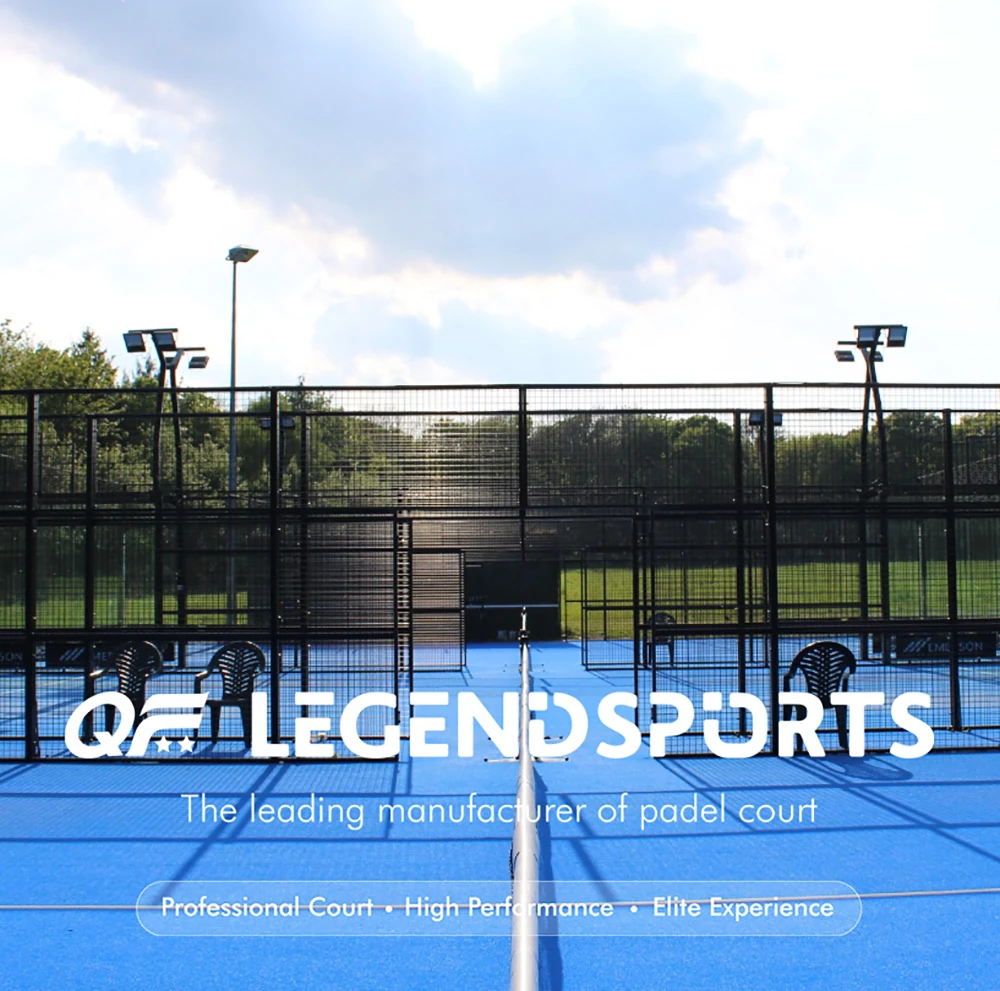
Case study: Qifan – Commercial Padel Club, United Kingdom (2025)
Project Location: United Kingdom
Project Year: 2025
Project Type: Commercial Padel Club
Number of Courts: 6 Panoramic Padel Courts
Project Background
In 2025, our client planned to develop a premium commercial padel club in the UK, aiming to provide a professional venue for daily training, club events, and amateur tournaments. Due to the UK’s rainy and windy climate, the project required a durable court system with excellent corrosion resistance, structural stability, and efficient drainage performance.
Our Solution
- Supplied 6 panoramic padel courts designed for commercial use.
- Used hot-dip galvanized steel structures with electrostatic powder coating for enhanced corrosion resistance.
- Equipped the courts with 12 mm tempered safety glass and high-quality artificial turf to ensure excellent playing performance and long service life.
- Provided complete installation drawings, remote technical guidance, and comprehensive after-sales support to ensure smooth project execution.
Project Results
The project was successfully completed and commissioned in 2025. All six courts were installed on schedule and met the client’s expectations for quality, appearance, and performance. The club now offers a modern and professional playing environment for members and local competitions. The client highly appreciated our product quality, installation support, and responsive after-sales service, laying a solid foundation for long-term cooperation.
Conclusion
Choosing a padel court manufacturer is ultimately about selecting a long-term project partner. By evaluating manufacturers across five key dimensions—company strength, certifications, manufacturing quality, project experience, and after-sales support—you can make a confident decision that ensures your club or sports project’s success.
With 12 years of industry experience, a 40,000+㎡ manufacturing facility, and projects completed across 50+ countries, Qifan offers the reliability and expertise that discerning club owners and sports investors demand. Contact us today to discuss your padel court project requirements.