Padel is one of the fastest-growing racquet sports worldwide. In 2025 alone, the industry added nearly 5,000 clubs and 8,000 courts, with the number of participants worldwide reaching 19.4 million. The 2026 Global Padel Report estimates 35 million players across 110+ countries. This trend presents a strong business case for sports clubs, resorts, schools, and community facilities. But the court type you choose—indoor, outdoor, or covered—will determine your player experience, utilization rates, operating costs, and bottom line.
1. Why Choosing the Right Padel Court Type Matters
1.1 How Court Type Affects ROI and Player Experience
The type of court you choose impacts much more than construction costs. It shapes utilization, operating costs, player satisfaction, and revenue. Courts that sit idle in rainy weather or extreme temperatures lose revenue, while overbuilt facilities may unnecessarily increase investment costs. Knowing the differences between indoor, outdoor, and covered courts leads to better investment decisions.
1.2 Indoor, Outdoor, and Covered Padel Courts at a Glance
Commercial facilities generally choose from three court types:
Indoor Padel Courts – Fully enclosed facilities with controlled playing conditions and year-round availability.
Outdoor Padel Courts – Open-air courts with the lowest construction costs but full exposure to weather.
Covered Padel Courts – Roofed courts that provide weather protection without the expense of a fully enclosed building.
2. What Is an Indoor Padel Court?
2.1 Key Features of Indoor Padel Courts
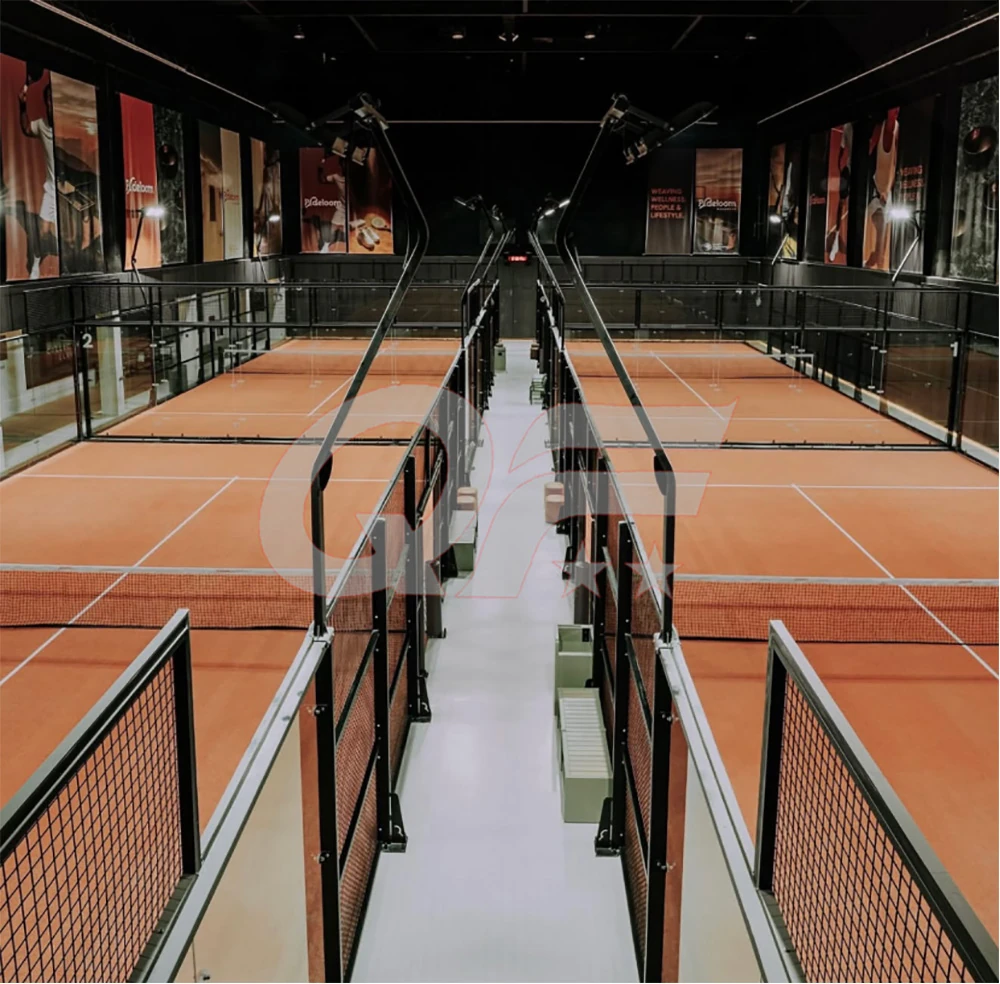
Indoor padel courts are housed in fully enclosed buildings that shield players from all weather conditions. Facilities typically include lighting systems, ventilation or HVAC equipment, and optional spectator areas. The court dimensions and playing specifications remain the same as outdoor courts, but environmental conditions are fully controlled.
2.2 Advantages of Indoor Court Construction
The biggest advantage of an indoor padel court is year-round playability. Unaffected by weather conditions, indoor courts ensure the continuity of play while offering consistent ball bounce, excellent visibility, and a comfortable sporting experience. For these reasons, high-end clubs, professional training academies, and tournament venues favor indoor courts to guarantee match quality and generate year-round revenue.
2.3 The Investment Case for Indoor Courts
Indoor construction costs more and takes longer, with higher monthly bills for power and upkeep. But in extreme climates, steady demand and premium rates usually justify the expense.
3. What Is an Outdoor Padel Court?
3.1 Key Features of Outdoor Padel Courts
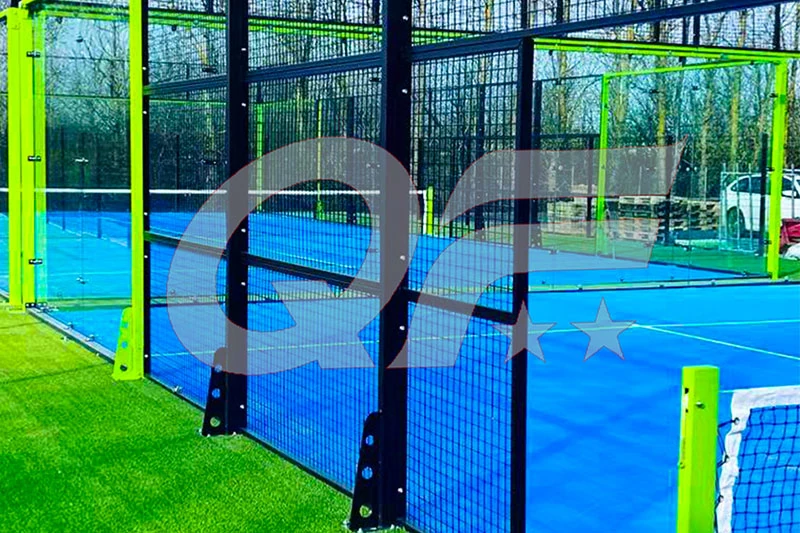
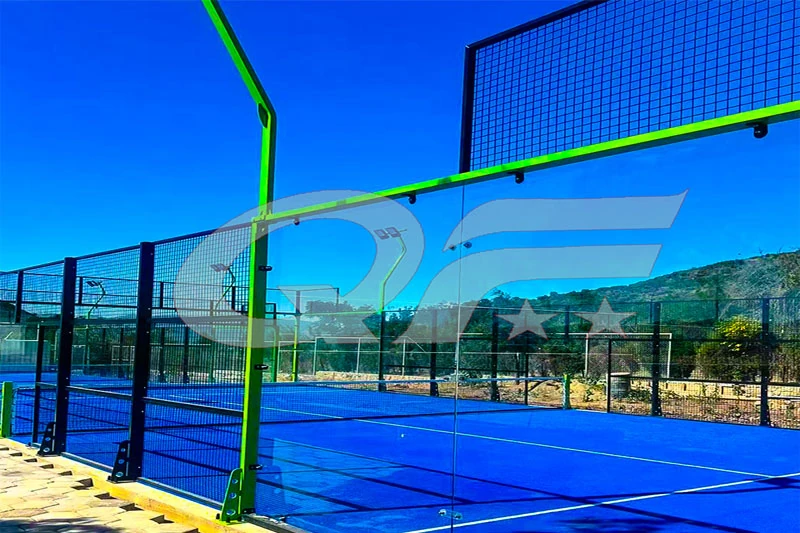
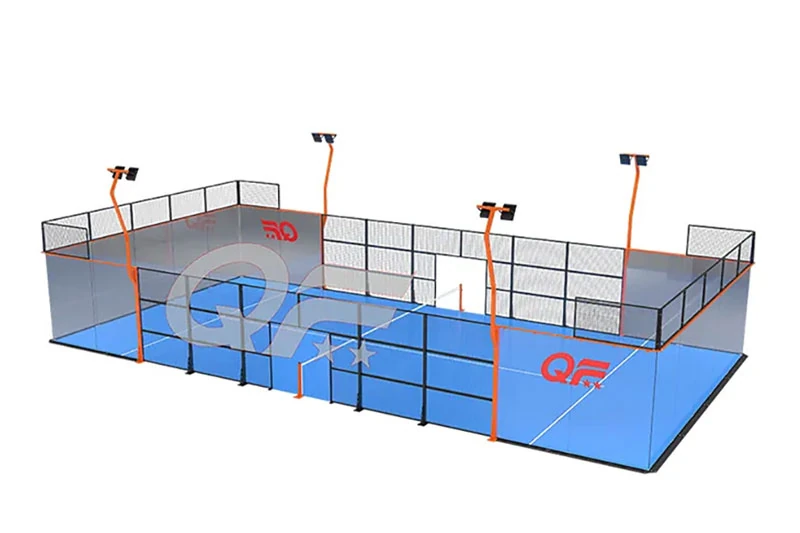
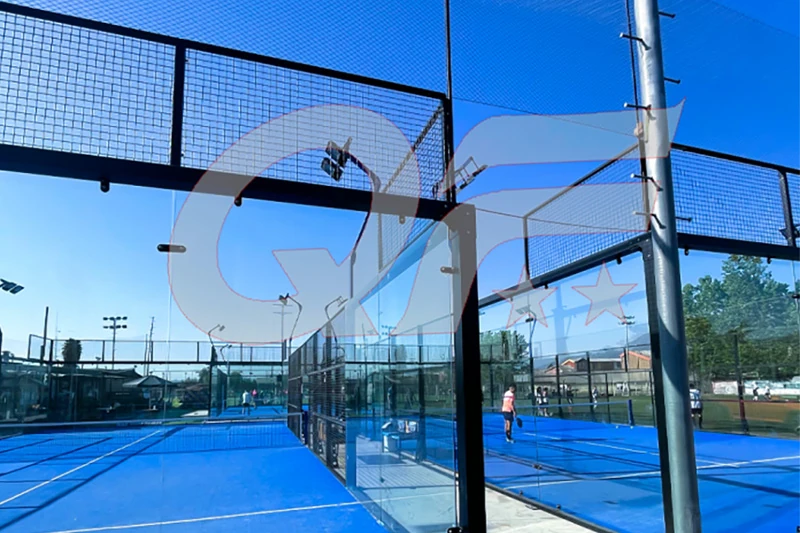
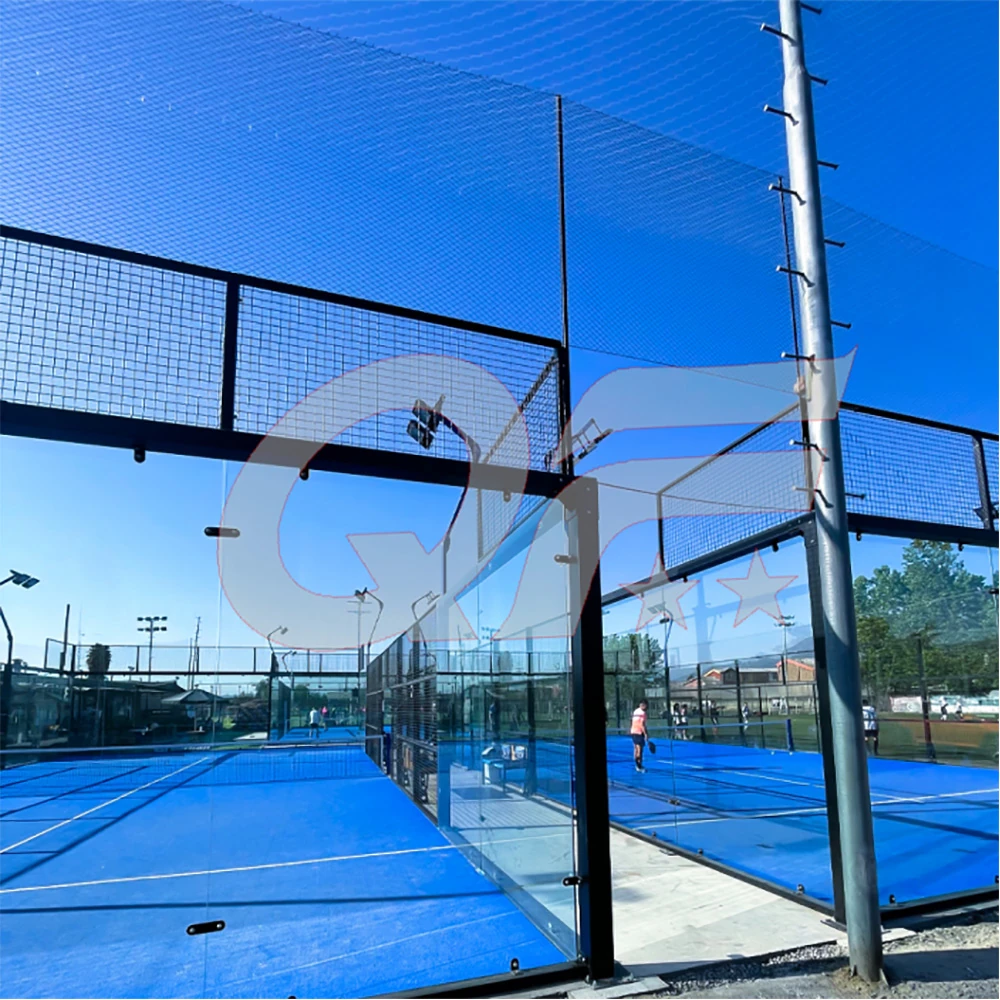
Outdoor padel courts are open-air spaces that bring the game into the natural environment. All that’s needed is a flat, well-drained foundation, plus the standard court structure of glass panels, fencing, and artificial turf.
3.2 Benefits of Open-Air Padel Facilities
Outdoor courts require minimal infrastructure, benefit from natural sunlight to reduce energy consumption, and offer the fastest project completion. For resorts, hotels, public parks, and residential developments in favorable climates, they provide an attractive recreational facility with a relatively low upfront commitment.
3.3 Weather-Related Challenges for Outdoor Courts
The main limitation is weather dependency. Rain, wind, snow, and extreme heat could cause the match to be interrupted and force the players to leave the field. In many regions, the annual utilization rate may decline by 15% to 30%.
4. What Is a Covered Padel Court?
4.1 How Covered Padel Courts Combine Indoor and Outdoor Benefits
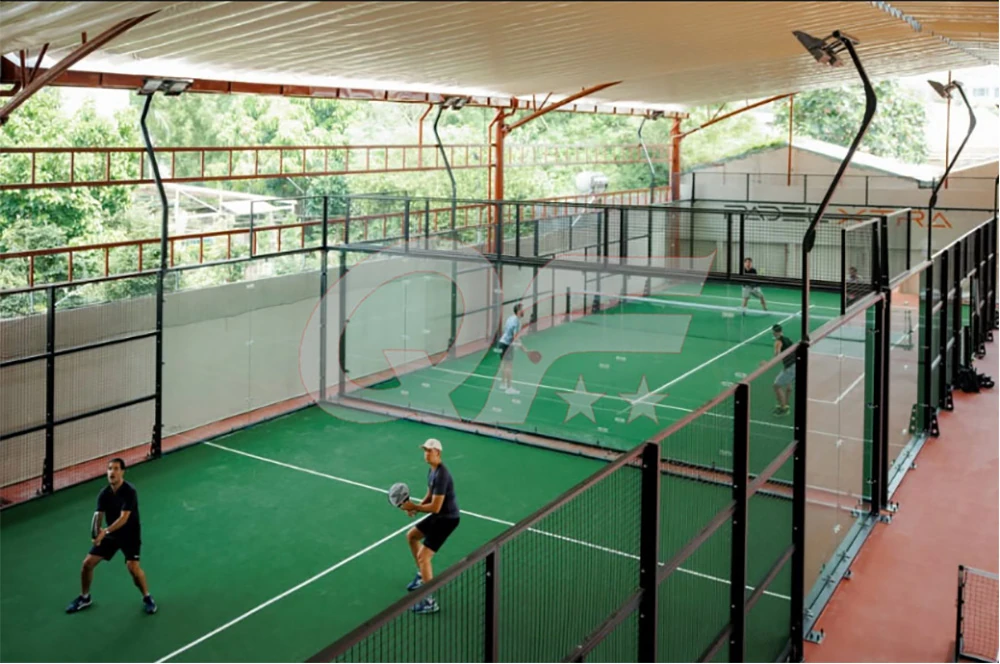
A covered padel court includes a permanent roof structure while keeping the sides open or partially enclosed. This design protects players from rain and direct sunlight while maintaining natural airflow and an outdoor atmosphere.
4.2 Roof Structure and Weather Protection Advantages
Rain and UV are no longer issues with a covered court—and you avoid the expense of HVAC and full enclosure.
4.3 Why Covered Courts Are Becoming Popular Among Commercial Clubs
Many commercial clubs choose covered courts to dodge weather disruptions and skip the steep cost of a full building. The result is high utilization, an all-weather comfortable experience, and robust long-term returns.
5. Indoor vs Outdoor vs Covered Padel Courts: Cost Comparison
| Factor | Indoor Court | Covered Court | Outdoor Court |
| Initial Investment | High | Medium | Low |
| Construction Time | Long | Medium | Short |
| Operating Cost | High | Medium | Low |
| Weather Protection | Excellent | Good | Limited |
| Annual Utilization | Very High | High | Medium |
| ROI Potential | High | Very High | Medium |
6. Which Court Type Generates the Highest Return on Investment?
6.1 Revenue Potential of Indoor Padel Courts
With 360+ operating days per year and the ability to command higher hourly rates, indoor courts are a perfect fit for markets where players are willing to pay for comfort and reliability.
6.2 Why Covered Courts Often Deliver the Best ROI
For most commercial clubs, covered courts offer the best ROI: moderate cost, high utilization, and operating expenses well below indoor facilities.
6.3 When Outdoor Courts Make Financial Sense
Outdoor courts make the most sense in dry, temperate regions and in settings where padel is a lifestyle addition rather than a financial pillar—resorts, public parks, and residential complexes, to name a few.
7. Best Applications for Different Padel Court Types
7.1 Indoor Padel Courts for Premium Clubs and Training Academies
Indoor courts are the preferred choice for high-end clubs, members-only sports centers, training academies, and event venues—especially in areas with frequent rain and snow or extreme weather.
7.2 Outdoor Padel Courts for Resorts, Hotels, and Community Centers
In regions with pleasant climates, outdoor courts are a popular choice for resorts, beach clubs, parks, residential communities, and other recreational facilities.
7.3 Covered Padel Courts for Commercial Sports Facilities and Schools
Covered courts are widely adopted by commercial clubs, schools, universities, multi-court sports centers, and corporate wellness facilities seeking high utilization and cost efficiency.
7.4 Recommended Court Types by Project Category
| Project Type | Recommended Solution |
| Premium Club | Indoor Padel Court |
| Commercial Club | Covered Padel Court |
| School / University | Covered Padel Court |
| Resort / Hotel | Outdoor or Covered Padel Court |
| Community Sports Center | Outdoor Padel Court |
| Rainy or Extreme Climate Areas | Indoor or Covered Padel Court |
8. How to Choose Between Indoor, Outdoor, and Covered Padel Courts
8.1 Consider Local Climate Conditions
Climate should guide your decision. Frequent rainfall or extreme temperatures point toward indoor or covered solutions, while mild, dry climates can successfully support outdoor facilities.
8.2 Evaluate Available Land and Budget
Indoor courts require the largest land and capital investment. Outdoor courts need minimal infrastructure and are the most budget-friendly. Covered courts offer a middle-ground solution with moderate land and cost requirements.
8.3 Estimate Long-Term Utilization Rates
Estimate the number of annual operating days based on local weather conditions, then multiply this by the projected booking frequency and hourly rate. Increased utilization directly boosts your bottom line.
8.4 Balance Investment Cost and Revenue Potential
Crunch the numbers on net returns rather than focusing solely on upfront costs. For many commercial operators, covered courts deliver the strongest balance between what you invest and what you earn over time.
9. Why Choose Qifan as Your Padel Court Manufacturer
HEBEI QIFAN SPORTS INDUSTRY CO., LTD was established in 2013 and operates a 46,000㎡ high-tech manufacturing facility. With over 220 professionals and ISO-certified quality systems, we specialize in complete indoor, outdoor, and covered padel court solutions. Our CE-certified products have been exported to over 50 countries across Europe, the Middle East, South America, and Asia. From design and manufacturing to installation, we provide a complete turnkey service—ensuring every project meets the highest standards of quality and performance.
10. Conclusion
There is no single best court type for every commercial facility. Indoor courts offer maximum utilization at maximum cost. Outdoor courts are cheapest but weather-dependent. Covered courts strike the best balance between cost and performance. For most commercial operators, covered courts offer the best ROI. Contact Qifan today to get a customized quote and professional advice, and to select the right court for your project.